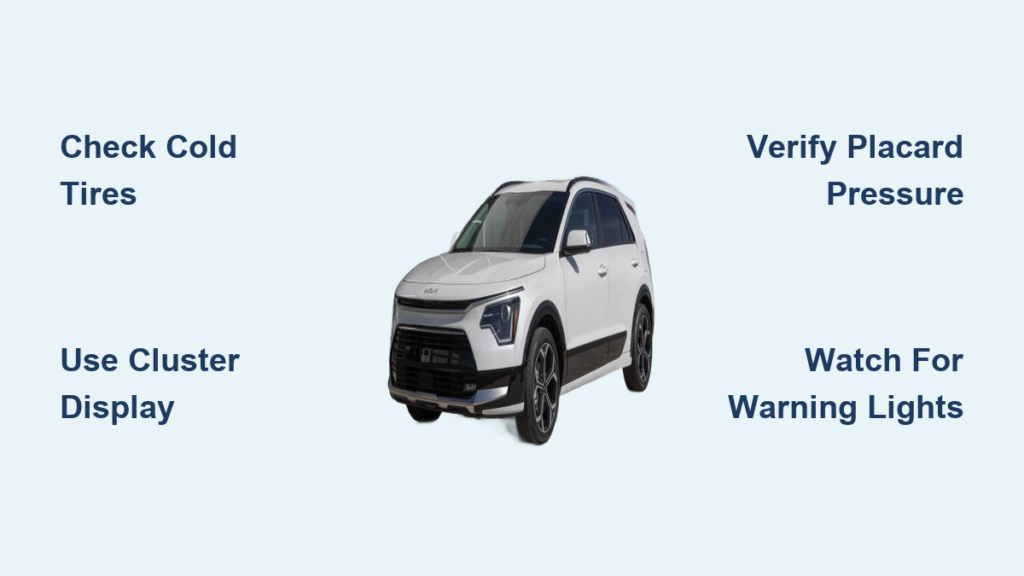
Nothing compromises your Kia Niro’s efficiency and safety faster than improper tire pressure. For hybrid and electric Niro owners, maintaining correct tire inflation isn’t just about safety—it directly impacts your vehicle’s electric range and fuel economy. When you learn how to check tire pressure on your Kia Niro properly, you’ll notice smoother handling, extended tire life, and maximum energy efficiency. This guide reveals exactly how to access your Niro’s built-in tire pressure monitoring system, interpret the readings accurately, and establish a maintenance routine that prevents costly tire damage and keeps you safe on the road.
Most drivers don’t realize their Kia Niro’s instrument cluster holds the key to effortless tire pressure monitoring without needing an external gauge. Unlike traditional vehicles requiring manual checks with a pressure gauge, your Niro features an advanced Tire Pressure Monitoring System (TPMS) that displays real-time readings for all four tires. By mastering these onboard tools and understanding seasonal pressure fluctuations, you’ll maintain optimal performance year-round. This article walks you through every step—from accessing the cluster display to responding to warning lights—so you can confidently handle tire pressure maintenance like a seasoned Niro owner.
Access Your Kia Niro’s Tire Pressure Readings Instantly
Your Kia Niro’s instrument cluster provides immediate access to tire pressure data without requiring manual checks with an external gauge. This feature saves valuable time and ensures you always have current pressure information while driving, making regular maintenance effortless.
Navigate the Steering Wheel Controls for Pressure Data
To view your tire pressure readings, locate the cluster menu button on your steering wheel—typically positioned near your thumb when gripping the wheel. Press this button to enter the main menu, then scroll through the LCD display options until you see “Information mode.” Select this option to instantly access your tire pressure monitoring information. The display will automatically update to show pressure readings for all four tires simultaneously in a clear, easy-to-read format. This method eliminates the need to manually check each tire with a separate gauge, providing comprehensive pressure data in seconds while keeping your focus on the road ahead.
Interpret Real-Time Tire Pressure Readings on Display
Once you’ve accessed the information mode, your instrument cluster will display the current pressure for each tire with labels indicating front left, front right, rear left, and rear right positions. The numerical values shown represent the actual pressure in your chosen measurement unit (PSI, KPA, or BAR). If any tire shows a significantly lower reading than the others, that tire likely needs immediate attention. The system updates pressure readings in real-time, so when you inflate a tire and restart your vehicle, the display will reflect the corrected pressure. This immediate feedback allows you to verify your adjustments without guesswork, ensuring all tires meet the manufacturer’s specifications before continuing your journey.
Customize Your Tire Pressure Display Units

Your Kia Niro allows you to select the measurement unit that matches your preference and local standards, ensuring you can read tire pressure data without conversion calculations. This customization prevents confusion when comparing your cluster readings to gas station air pumps or service center recommendations.
Switch Between PSI, KPA, and BAR Measurements
Access the user settings mode through your steering wheel controls to change how tire pressure appears on your display. Navigate to the display options or unit preferences section within the settings menu, where you’ll find the choice between PSI (pounds per square inch), KPA (kilopascals), and BAR units. Select your preferred measurement system based on what you’re most comfortable with or what matches local service stations. After selection, all tire pressure readings throughout your vehicle’s display system will consistently show in your chosen unit. This seamless integration means you won’t need to mentally convert numbers when inflating tires at gas stations or service centers.
Match Display Units to Manufacturer Recommendations
Your vehicle placard—typically located on the driver’s side door jamb—specifies the recommended cold tire inflation pressure using specific units. Ensure your cluster’s display units match these recommendations to avoid inflation errors. If your placard shows pressures in PSI but your cluster displays BAR, you risk over- or under-inflating your tires by significant margins. When adding air at service stations, verify that the pump’s display uses the same units as your cluster to maintain accuracy. For Niro owners who’ve installed non-standard tire sizes, determining the proper inflation pressure for those specific tires becomes essential, as the factory placard recommendations may no longer apply.
Establish Your Monthly Tire Pressure Maintenance Routine
Consistent monthly checks form the foundation of proper tire care for your Kia Niro, preventing premature wear and maintaining optimal efficiency. This simple habit takes just minutes but delivers significant benefits for your safety, tire longevity, and vehicle performance.
Check Tires When Cold for Precision Measurements
For accurate pressure readings, always check your tires when they’re cold—meaning before you’ve driven the vehicle that day or after it’s been parked for at least three hours. Driving heats the air inside your tires, causing expansion that creates false high readings. A morning check before your commute provides the most reliable baseline measurement. If you must check after driving, remember that pressure increases approximately 1-2 PSI for every 10°F temperature rise, though cold checks remain the gold standard. Never rely solely on the TPMS warning light, as it typically only activates when pressure drops 25% below recommended levels—already enough to cause damage and reduced efficiency.
Locate Your Exact Recommended Inflation Pressure
Your Kia Niro’s specific pressure requirements are listed on the vehicle placard, usually found on the driver’s side door jamb or inside the fuel door. This label specifies the cold tire inflation pressures for your vehicle’s original equipment tires. The recommended pressure may differ between front and rear tires depending on your Niro’s model year and configuration. If you’ve installed different tire sizes than those indicated on the factory placard, you must determine the proper inflation pressure for those specific tires, as using the factory recommendation could lead to improper inflation. Always target the placard’s recommendation—not the maximum pressure listed on the tire sidewall, which represents the tire’s capacity, not your vehicle’s optimal pressure.
Decode Your Kia Niro’s TPMS Warning Lights Correctly
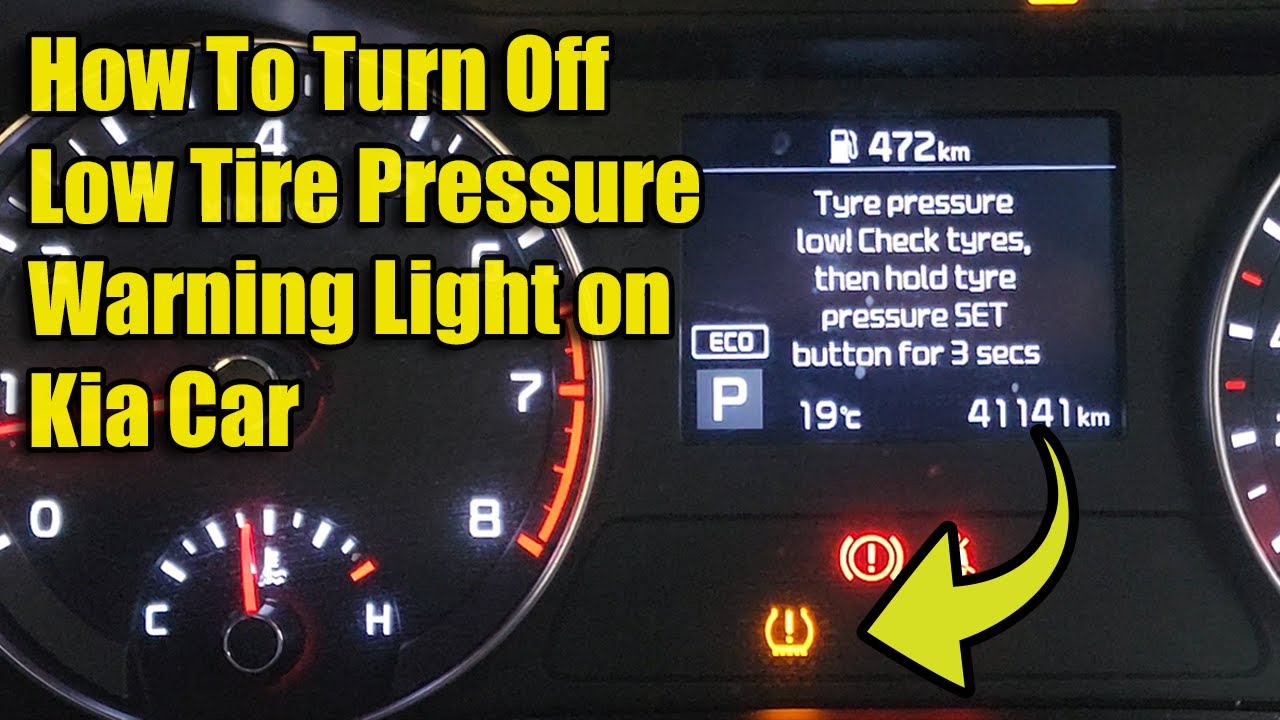
Understanding what your tire pressure warning lights indicate prevents unnecessary panic and ensures you respond appropriately to actual tire issues. Your Niro’s TPMS system uses specific visual cues to communicate different conditions that require your attention.
Respond Immediately to Low Tire Pressure Warnings
When the low tire pressure telltale illuminates on your dashboard, it means one or more tires has fallen significantly below recommended pressure. Pull over safely as soon as possible to inspect your tires for visible damage or punctures. Use a reliable pressure gauge to check each tire’s actual pressure against your placard’s recommendation. Inflate under-inflated tires to the proper cold pressure immediately—driving on significantly under-inflated tires causes dangerous overheating that can lead to tire failure. For hybrid and electric Niro models, under-inflation also directly reduces your electric range and fuel efficiency, making prompt correction essential for maintaining your vehicle’s performance capabilities.
Identify TPMS System Malfunctions Quickly
Your Niro’s TPMS malfunction indicator works differently than the low pressure warning—it flashes for about one minute when you start the vehicle, then remains continuously illuminated if a system problem exists. This flashing sequence repeats with each ignition cycle as long as the malfunction persists. Common causes include incompatible replacement tires or wheels, dead sensor batteries, or electrical issues within the system. After installing new tires or wheels, always verify that the TPMS malfunction indicator doesn’t illuminate, as incompatible components may prevent the system from functioning properly. A malfunctioning TPMS means you won’t receive warnings for actual low pressure situations, making manual monthly checks even more critical for safety.
Recognize Winter Tire Pressure Challenges for Niro Owners
Cold weather creates predictable pressure drops that frequently trigger TPMS warnings, even when your tires were properly inflated during warmer months. Understanding this natural phenomenon prevents unnecessary service visits and ensures proper winter maintenance.
Understand Why Winter Triggers False Low-Pressure Warnings
During cold weather, your Niro’s low tire pressure telltale may illuminate despite recent proper inflation due to basic physics principles. Charles’s Law explains that as temperature decreases, gas pressure decreases proportionally—meaning for every 10°F temperature drop, tire pressure decreases by approximately 1-2 PSI. A tire properly inflated at 70°F might show low pressure at 40°F simply due to the temperature change, not because of an actual leak. This seasonal pressure fluctuation is normal and doesn’t indicate a TPMS malfunction, but rather demonstrates the system working as designed to keep you informed of actual pressure conditions.
Adjust Winter Tire Pressure Strategically
When temperatures drop significantly, check your tire pressure when tires are cold and add air to reach the recommended pressure. After inflating, drive your Niro for several minutes to allow pressure to stabilize, then recheck the cluster display—sometimes the TPMS warning remains active temporarily due to the system’s margin of error in measurement. The low tire pressure telltale will only deactivate when pressure exceeds the recommended level by a sufficient margin to compensate for these measurement variations. During winter months, increase your pressure checks to bi-weekly to account for frequent temperature swings that dramatically affect tire pressure.
Know When to Seek Professional TPMS Service
While routine pressure maintenance is straightforward, certain TPMS issues require specialized diagnostic equipment only available at professional service centers. Recognizing these situations prevents driving with compromised safety systems.
Identify Critical TPMS Malfunctions Requiring Service

Schedule professional TPMS diagnostics immediately if: the low tire pressure telltale doesn’t illuminate for approximately 3 seconds during startup; the TPMS malfunction indicator remains illuminated after its initial one-minute flashing period; or the low pressure warning stays lit despite verified proper inflation in all tires. These conditions indicate system faults that prevent accurate pressure monitoring, leaving you without this critical safety feature. Authorized Kia dealers possess the specialized diagnostic tools needed to communicate directly with your vehicle’s TPMS modules, identify specific sensor failures, and perform necessary system recalibrations that general repair shops may not handle correctly.
Professional Service After Tire or Wheel Replacement
Always have your TPMS system checked by a professional after replacing tires or wheels, as incompatible components can disrupt system functionality. Some aftermarket wheels lack TPMS sensor compatibility, or the sensors may need transfer from old wheels to new ones. Tire pressure sensor batteries also have limited lifespans (typically 5-10 years) and may require replacement during your Niro’s lifetime. A qualified technician can verify all sensors are functioning, recalibrate the system if necessary, and address persistent warning lights that appear after tire service—ensuring your safety system continues protecting you on the road.