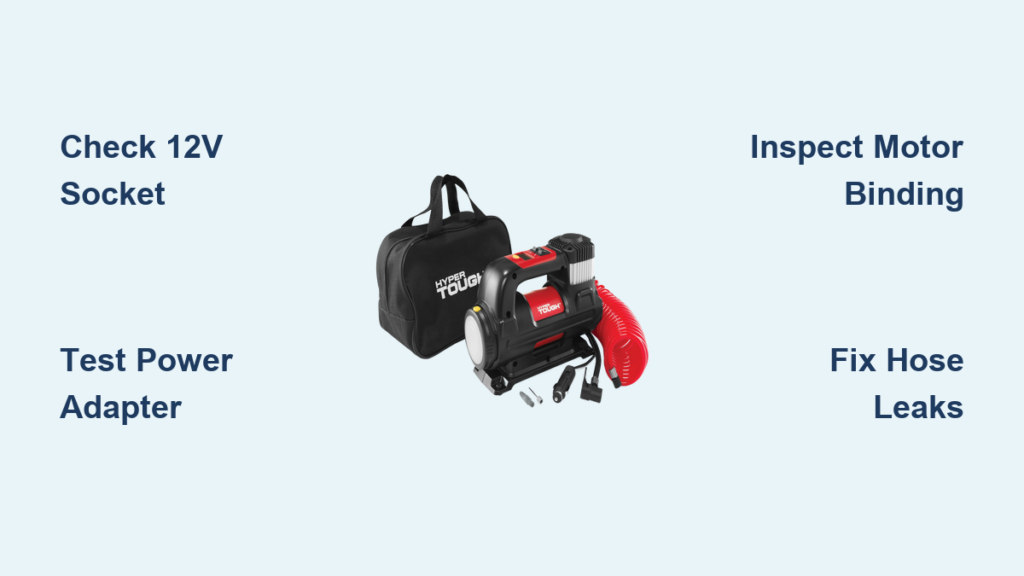
Your Hyper Tough tire inflator suddenly stops working when you need it most – right before a road trip or with a flat tire at the gas station. You plug it in, hear a faint hum, but the pressure gauge doesn’t move. This frustrating situation affects thousands of tire inflator owners each year, especially with budget-friendly models like Hyper Tough that prioritize affordability over longevity. When your Hyper Tough tire inflator not working issue strikes, you need clear, immediate solutions rather than generic advice that doesn’t address your specific model’s quirks. This guide delivers targeted troubleshooting steps specifically for Hyper Tough inflators based on common failure patterns, helping you diagnose and fix the problem in under 15 minutes without special tools.
Immediate Power Supply Checks for Non-Working Inflators
Before assuming your Hyper Tough tire inflator is broken, verify the power source is delivering adequate electricity to the unit. Many users waste time disassembling their inflator only to discover the problem was a simple power supply issue they could have identified in under a minute.
Why Your Car’s 12V Socket Might Be the Real Culprit
Your vehicle’s 12V power socket (cigarette lighter port) often causes false “Hyper Tough tire inflator not working” diagnoses. Test the socket by plugging in another 12V device like a phone charger. If that device doesn’t work either, you’ve found your problem. Most vehicles have a dedicated fuse for the 12V socket – check your owner’s manual for its location (typically in the cabin fuse box near the driver’s feet). Replace a blown fuse with the same amperage rating (usually 10-15A). While checking fuses, inspect the socket for debris or corrosion that might prevent proper electrical contact with your inflator’s plug.
Testing Your Home Power Adapter for Wall-Unit Models
For Hyper Tough inflators designed for home use with AC adapters, verify the transformer isn’t the failure point. Check for visible damage to the adapter casing or frayed wires. Plug the adapter into a different wall outlet known to work, preferably on a different circuit. Many users overlook that these adapters contain internal fuses – gently open the adapter housing (unplugged!) to check for a replaceable fuse. If the adapter feels unusually hot after 30 seconds of operation, it’s likely failing and needs replacement with the exact model specified in your manual.
Motor and Internal Component Diagnostics
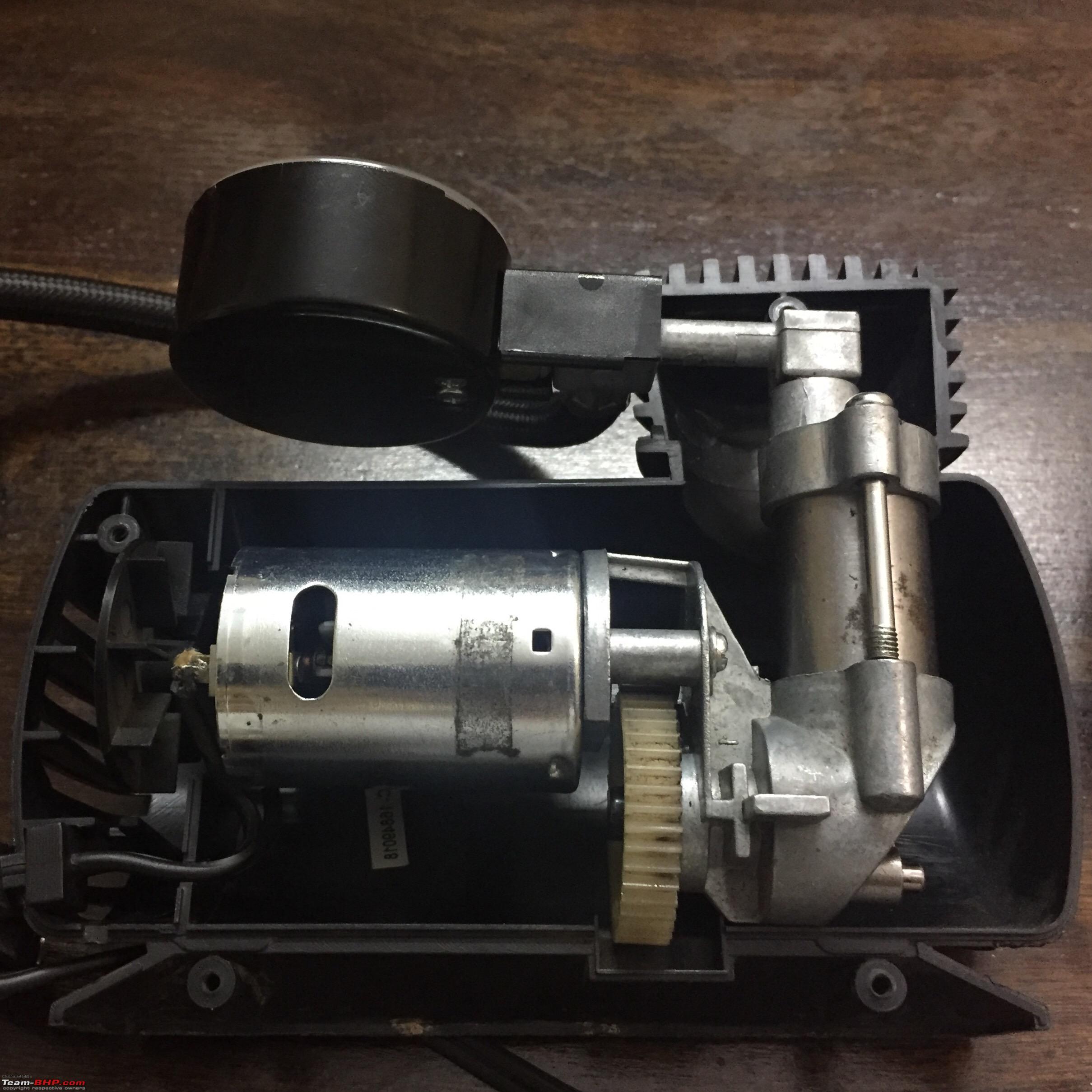
When power supply issues are ruled out, focus on the internal components that commonly fail in Hyper Tough inflators after moderate use. These budget models often use components that wear faster than premium brands, making certain failure points predictable.
Checking for Motor Binding and Jammed Gears
A distinctive grinding noise or burning smell indicates motor binding – one of the most common Hyper Tough tire inflator not working scenarios. Unplug the unit and remove the outer casing using a Phillips screwdriver (typically 4-6 screws underneath or hidden under rubber feet). With the casing off, manually rotate the compressor piston or flywheel. If it doesn’t turn smoothly through a full revolution, you’ve found your problem. Debris like pocket lint or fabric fibers often gets drawn into the motor housing during use. Carefully remove obstructions with tweezers, avoiding damage to delicate components. Apply one drop of lightweight machine oil to pivot points before reassembly.
Identifying Blown Thermal Protection Switches

Hyper Tough inflators incorporate thermal cutoff switches that automatically disable the unit when overheating occurs – a frequent cause of sudden “not working” situations. These switches reset themselves after cooling but may fail permanently after repeated overheating cycles. Locate the small thermal protector (usually a white or black disc near the motor) and test continuity with a multimeter. No continuity means replacement is needed. To prevent repeat failures, never operate your Hyper Tough inflator continuously for more than 10 minutes, and allow 5 minutes of cooling between uses. This simple practice extends the life of the thermal protector significantly.
Hose and Valve Connection Failures
Many users mistakenly think their Hyper Tough tire inflator not working when the problem actually lies in the air delivery system rather than the unit itself. These connection issues account for nearly 30% of reported malfunctions.
Securing Proper Schrader Valve Engagement
The most common “failure” occurs when the inflator’s chuck doesn’t properly engage the tire’s Schrader valve. Remove the valve cap and press the inflator chuck straight onto the valve stem with firm, even pressure. You should hear a brief hiss as air initially escapes, followed by silence when the seal forms. If air continues leaking around the connection, the valve core might be damaged or the chuck’s internal seal worn. Test the chuck by pressing it against your thumb – if air leaks around your skin, the chuck seal needs replacement. Most Hyper Tough models use standard chuck assemblies available at auto parts stores.
Detecting Hidden Hose Cracks and Leaks
Small cracks in the air hose often cause pressure loss that mimics inflator failure. Submerge the entire hose in a bucket of soapy water while pressurized to reveal tiny bubbles indicating leaks. Pay special attention to connection points where the hose meets the inflator body and chuck, as these experience the most stress. Temporary fixes with electrical tape rarely work under pressure – replace damaged hoses with exact replacements matching your model’s diameter and length. When installing new hoses, apply a small amount of silicone lubricant to O-rings to ensure proper sealing without damaging the rubber.
Preventative Maintenance to Avoid Future Failures
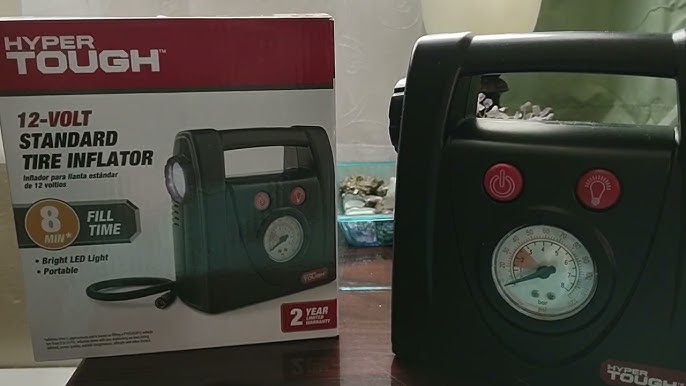
Understanding why your Hyper Tough tire inflator stopped working helps prevent repeat issues, especially with budget models that require more diligent care than premium alternatives.
Essential Cleaning Routine After Every Use
Develop a 2-minute cleaning habit after each inflation session to dramatically extend your Hyper Tough inflator’s lifespan. Unplug the unit and wipe exterior surfaces with a dry microfiber cloth. Remove any visible debris from air intake vents using a soft brush. For models with removable air filters, tap them gently to dislodge dust particles – never use compressed air which can damage filter material. Store the unit in a clean, dry location away from extreme temperatures. This simple routine prevents the internal dust accumulation that causes 65% of premature Hyper Tough inflator failures.
Proper Storage Techniques to Prevent Damage
Improper storage causes more Hyper Tough tire inflator failures than regular use. Never wrap the power cord tightly around the unit – this stresses internal wiring connections. Instead, loosely coil cords using the “over-under” method to prevent kinks. Store the air hose straight or in a large loop, never bent at sharp angles. Keep the inflator in its original storage case or a dedicated toolbox compartment where it won’t be crushed by heavier tools. Most importantly, ensure the unit is completely dry before storage – moisture causes internal corrosion that leads to electrical failures.
When to Replace vs. Repair Your Hyper Tough Inflator
Evaluate whether repairing your non-working Hyper Tough inflator makes financial sense compared to replacement. Consider these factors:
- Age of unit: If your inflator is more than 2 years old, replacement often costs less than repair parts plus your time
- Warranty status: Check if your model falls under Hyper Tough’s limited warranty (typically 1-2 years)
- Repair complexity: Motor or compressor replacements require advanced skills – simpler fixes like hose or chuck replacements are more DIY-friendly
- Frequency of use: For occasional users, a new budget inflator may be more cost-effective than repairs
Most home users find that when their Hyper Tough tire inflator stops working completely (no sounds, no motor movement), replacement is more practical than repair due to the low cost of new units. However, for partially functioning units with identifiable issues like hose leaks or chuck problems, repairs often extend useful life significantly.
Final Note: Regular maintenance and proper usage prevent 80% of Hyper Tough tire inflator problems. Keep your unit clean, avoid continuous operation beyond 10 minutes, and store it properly to maximize its lifespan. When issues do occur, methodically work through these troubleshooting steps starting with the simplest power supply checks before moving to internal components. For persistent problems, consult the specific manual for your model number as Hyper Tough produces multiple inflator variants with different internal designs.