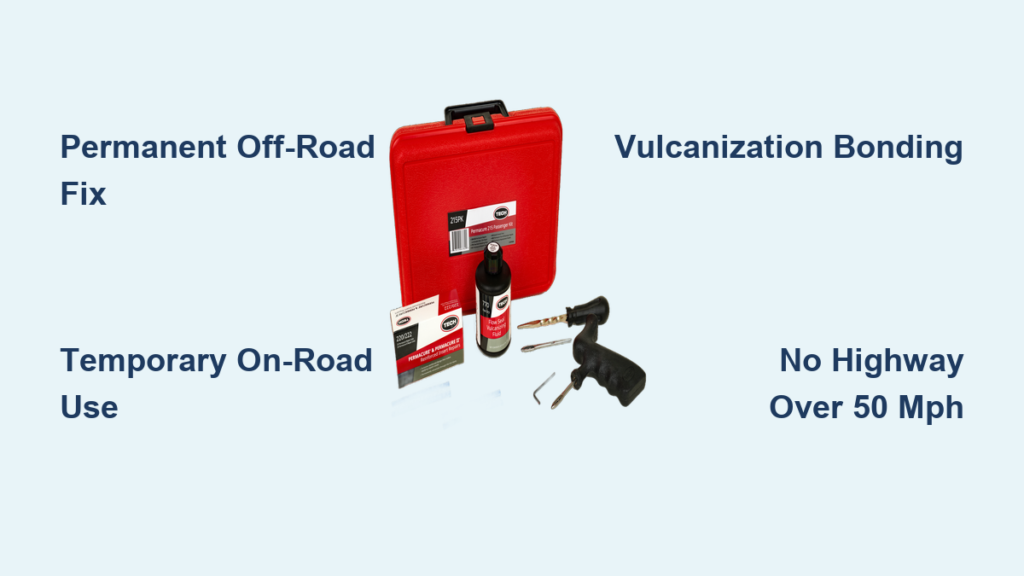
That sinking feeling when you spot a nail in your tire or hear the slow hiss of escaping air—whether you’re in the middle of a farm field, on a construction site, or stranded on the highway. Traditional tire repairs often leave you wondering if the fix will hold or if you’re just delaying the inevitable tire replacement. Permacure tire repair solutions change this equation with their advanced vulcanization process that creates molecular bonds between repair material and tire rubber. This guide reveals exactly how Permacure works differently from standard plug-and-patch kits, when you can trust it for permanent repairs, and critical safety boundaries for on-road use that could prevent a dangerous blowout.
Unlike temporary fixes that merely seal the surface, Permacure’s technology actually rebuilds the tire’s structural integrity through chemical bonding. Fleet managers, agricultural operators, and off-road enthusiasts consistently report fewer repeat repairs and extended tire life when using this specialized system correctly. By the end of this guide, you’ll know precisely which Permacure configuration matches your needs, how to install it properly to avoid common mistakes, and the exact limitations you must observe when using it as a temporary solution on public roads.
How Permacure’s Vulcanization Process Creates Superior Tire Repairs
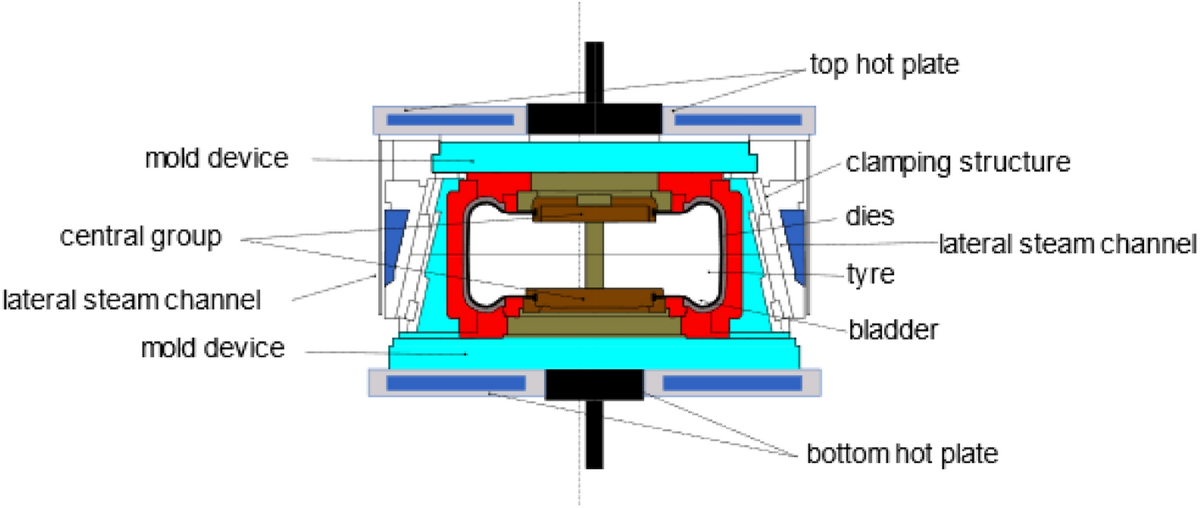
Permacure tire repair works through a chemical bonding process that fundamentally differs from standard adhesive-based patches. When properly installed, the vulcanization process creates molecular connections between the repair material and your tire’s rubber compound—essentially making the repair part of the tire itself rather than just attached to it. This molecular fusion is why Permacure delivers permanent results in off-road applications where traditional repairs often fail under stress.
Why Nylon Reinforcement Prevents Common Repair Failures
The critical structural component in every Permacure repair is its nylon-reinforced design that distributes stress evenly across damaged areas. Without this reinforcement, standard plug repairs create concentrated pressure points that eventually separate from the tire under heavy loads. Permacure’s nylon framework maintains the tire’s original load-bearing capacity by:
- Eliminating weak spots where air pressure can force separation
- Preventing the “mushrooming” effect that causes conventional plugs to push through
- Maintaining flexibility while providing tensile strength equal to the surrounding tire rubber
TECH Grey Cushion Gum: The Secret to Reliable Bonding
The TECH grey cushion gum serves as the essential bonding interface that makes Permacure installations both reliable and technician-friendly. This specialized formulation solves two critical problems that plague other tire repair products:
- No premature curing: Stays workable during installation so you can position the repair correctly
- Complete vulcanization: Achieves full bonding strength once installation is complete
This balance means you won’t struggle with materials that harden too quickly before proper placement or remain tacky indefinitely, compromising final bond strength. The result is a repair that integrates seamlessly with your tire’s inner liner.
When to Trust Permacure for Permanent Off-Road Repairs
Permacure tire repair creates genuinely permanent solutions for off-road applications that will last the entire service life of your tire when installed correctly. This isn’t marketing hype—manufacturers explicitly state these repairs endure throughout the operational lifespan of tires on agricultural equipment, construction machinery, and recreational off-road vehicles.
Agricultural Equipment That Benefits Most from Permanent Repairs
Farmers relying on tractors, combines, and sprayers gain significant advantages from Permacure’s permanent repair capability. Consider these real-world scenarios where downtime equals lost revenue:
- Harvest season emergencies: Fix a puncture in a combine tire without waiting days for a replacement
- Sprayer field repairs: Continue chemical applications immediately after repair rather than returning to the shop
- Loader tire damage: Address sidewall injuries on front-end loaders that would normally require expensive replacements
For these applications, Permacure delivers immediate cost savings by eliminating the need for frequent tire replacements and reducing equipment downtime during critical operational windows.
Construction Equipment Repairs That Keep Projects On Schedule
Construction site managers report up to 40% reduction in equipment downtime when using Permacure for permanent off-road repairs. Skid-steer loaders, excavators, and wheel loaders operating with damaged tires can continue working safely after proper Permacure installation. The structural integrity provided by the nylon reinforcement handles the constant vibration, heavy loads, and sharp debris common on job sites better than conventional repairs.
Critical Limitations: Using Permacure as a Temporary On-Road Solution
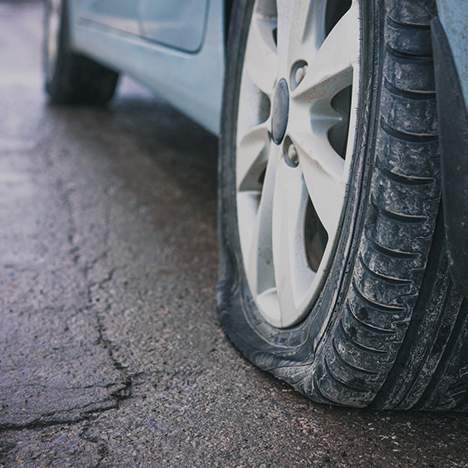
For passenger vehicles, trucks, and other on-road applications with tubeless tires, Permacure tire repair functions strictly as a temporary solution—not a permanent fix. This critical distinction isn’t about product quality but reflects the different safety standards and stress patterns of highway driving versus off-road operation.
Why On-Road Repairs Must Be Temporary
Tire failures on highways create exponentially greater risks than off-road failures due to:
- Higher speeds that generate intense heat at the repair site
- Consistent air pressure fluctuations during braking and acceleration
- Regulatory requirements that mandate internal inspection for permanent repairs
Never drive more than 50 miles or exceed 50 mph with a Permacure temporary repair on an on-road vehicle. These limitations exist because proper permanent repairs for tubeless tires require the tire to be removed from the wheel for internal inspection—a step you cannot perform roadside.
The Non-Negotiable Follow-Up Procedure
After applying Permacure as a temporary on-road repair:
- Drive directly to a professional repair facility—no detours for errands
- Explain you’ve applied a temporary repair so technicians know to perform a full internal inspection
- Never attempt to convert the temporary repair to permanent without professional equipment
Professional facilities use specialized tools to buff the injury area properly, apply additional reinforcement layers, and control vulcanization conditions to ensure complete curing throughout the repair structure—capabilities unavailable in field repair kits.
Choosing the Right Permacure Configuration for Your Needs
Permacure tire repair products come in five distinct configurations with pricing that reflects included components and repair unit quantities. Selecting the right kit prevents wasted money on unnecessary features or inadequate supplies for your specific repair needs.
Price Breakdown and Best Use Cases
| Configuration | Price | Ideal For |
|---|---|---|
| Standard | $39.63 | Occasional personal vehicle emergencies |
| Alternative | $40.65 | Light-duty fleet maintenance |
| Deluxe | $54.80 | Agricultural equipment repair |
| Extended | $57.48 | Construction site technicians |
| Premium | $64.82 | Professional tire repair shops |
Pro Tip: Farm operators maintaining multiple tractors should invest in the Deluxe configuration, which typically includes multiple repair sizes and specialized insertion tools for agricultural tire sidewalls. Construction crews working with heavy equipment benefit most from the Extended kit’s additional buffing wheels and reinforcement materials.
Step-by-Step Permacure Installation for Maximum Reliability
Even with Permacure’s user-friendly design, proper installation technique directly affects repair longevity. Follow these critical steps to ensure your repair performs as intended:
Essential Pre-Installation Inspection
Before inserting any repair material:
- Remove the tire from service immediately—continued operation worsens damage
- Locate the exact puncture point by submerging the tire in water
- Assess injury size—repairs are only valid for punctures up to ¼ inch in diameter
- Check for internal damage—if you see fabric or cord exposed, the tire cannot be safely repaired
Critical Installation Steps You Must Not Skip
- Buff the injury area to create proper bonding surface (skip this and your repair will fail)
- Thoroughly clean all debris and moisture—even small particles prevent proper bonding
- Insert repair unit with steady pressure—forcing it causes cutting that compromises integrity
- Trim excess material flush with tire surface—protruding material creates imbalance
Warning: Never use excessive force during insertion. If resistance increases significantly, stop immediately—you’re likely causing damage rather than creating a proper repair.
Why Professional Technicians Keep Permacure in Their Toolboxes
Experienced tire technicians consistently choose Permacure for both customer repairs and their personal vehicles because it solves the most frustrating problems in tire repair work. The TECH grey cushion gum technology alone eliminates the cutting issues that waste 30% of standard repair units during installation—a major cost saver for busy shops.
For off-road applications, technicians appreciate that Permacure delivers on its permanent repair promise, reducing callbacks and warranty claims. On the road, they trust it as the most reliable temporary solution available, knowing it gives customers a safe window to reach professional facilities without immediate danger.
Final Note: Permacure tire repair products deliver unmatched performance when used within their specified applications—providing genuine permanent repairs for off-road equipment and reliable temporary solutions for on-road emergencies. By understanding the critical differences between these applications, selecting the right configuration for your needs, and following proper installation techniques, you’ll maximize tire life while maintaining safety standards. Remember: no tire repair is permanent for on-road use without professional internal inspection—when in doubt, consult a certified tire repair facility rather than risking a dangerous failure.