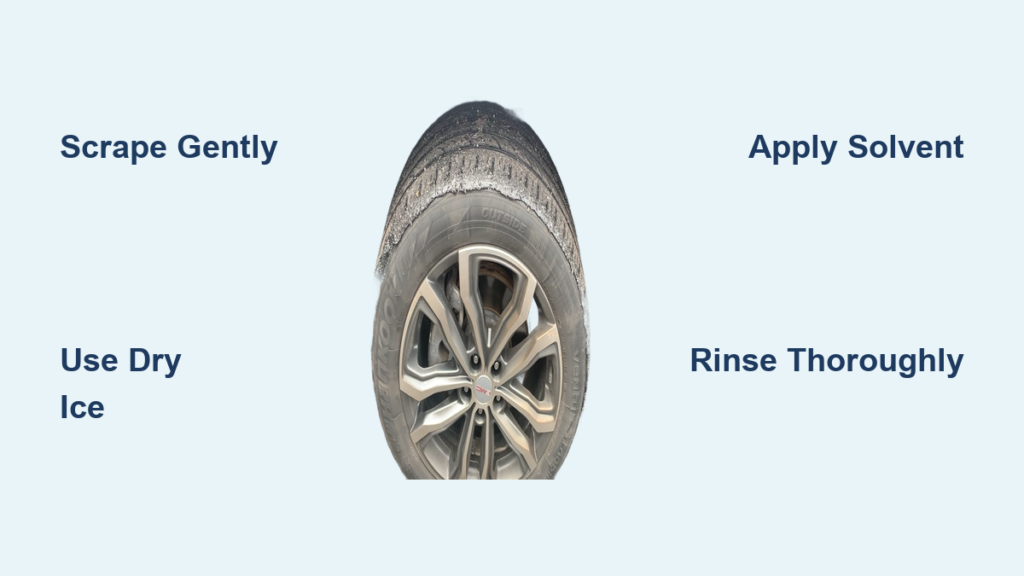
That sticky black substance clinging to your tire can transform a smooth drive into an uncomfortable vibration nightmare. When you discover tar stuck to your tire after driving on freshly paved roads, it’s more than just unsightly—it creates uneven weight distribution that causes noticeable thumping at highway speeds. Finding how to remove tar from a tire properly prevents chunks from dislodging and damaging your vehicle’s paint while restoring smooth performance. This guide delivers the exact methods professionals and experienced DIYers use to eliminate stubborn tar deposits from tire treads without damaging rubber. You’ll learn which household products work best, when to seek professional help, and crucial safety steps most tutorials overlook.
Why Tar Builds Up on Your Tires
Tar accumulation happens most frequently after driving on newly paved or resurfaced roads where the soft tar becomes sticky when heated by the sun. Your tires pick up this gooey material as they roll across the surface, collecting gravel and debris along the way. This isn’t merely cosmetic—tar deposits add uneven weight to your tire, causing that annoying vibration at higher speeds. Large chunks mixed with gravel can break free while driving, potentially leaving scratches on your vehicle’s body panels.
The problem has become more common due to increased use of liquid tar applications for road crack repair and pothole patching. Understanding why tar sticks to your tires helps you choose the right removal approach and prevent buildup before it becomes severe. One forum member discovered from a police officer that this type of repair method was implemented partly due to environmental considerations, though it creates its own issues including premature tire wear and difficult cleaning requirements.
Gather Your Removal Supplies

Before starting, collect the tools and materials you’ll need based on your chosen removal method. For physical scraping, keep a dull butter knife, plastic putty knife, or rubber tire scraper on hand—never use sharp metal tools that could puncture or gouge your tire rubber. You’ll also want a stiff scrub brush for working in tread grooves, clean microfiber cloths for drying, and mild detergent for the final wash.
Chemical approaches require your chosen solvent, whether that’s a commercial tar remover like Turtle Wax Tar and Bug Remover, 3M adhesive remover, or household alternatives like WD40, kerosene, or Goo Gone. Always wear rubber gloves during chemical application, and work in a well-ventilated area to avoid fume accumulation. Having a water source nearby for rinsing is essential regardless of which method you use.
Physical Tar Removal Techniques
Physical removal through scraping works well for moderate buildup and eliminates concerns about chemical damage to your tire rubber. The process requires patience but delivers reliable results without any hazardous solvents.
Scraping Method
Start by removing any loose gravel or debris from the tread with your hands or a soft brush. This prevents larger particles from interfering with your scraping work. Use your dull scraper to gently lift tar from the tread pattern, working in small sections and applying steady pressure rather than forceful digging. The goal is to pry the tar loose without gouging the rubber.
For best results, warm up your tires first by driving briefly—the heat softens the tar and makes it more pliable for removal. Work systematically around the tire, making multiple passes over stubborn areas. Pay particular attention to the tread grooves where tar tends to pack in deeply. One dealer technician spent approximately 30 minutes carefully scraping a customer’s tire using this method, successfully restoring proper balance for a reasonable fee.
Dry Ice Approach
Dry ice offers an innovative alternative that hardens tar until it becomes brittle and easy to remove. The freezing temperature causes the tar to contract and lose its grip on the tire rubber. Simply place dry ice directly over tar spots or drive the tire onto dry ice laid on the ground for several minutes until the material hardens. Once solidified, the tar often pops off in larger pieces with minimal scraping effort.
This method proves particularly useful for thick, gloopy deposits that would otherwise require extensive scraping. The dry ice approach follows the same principle used for removing gum from carpets—freezing makes adhesive materials brittle enough to remove without the mess of scraping sticky, pliable substance.
Chemical Solvent Solutions
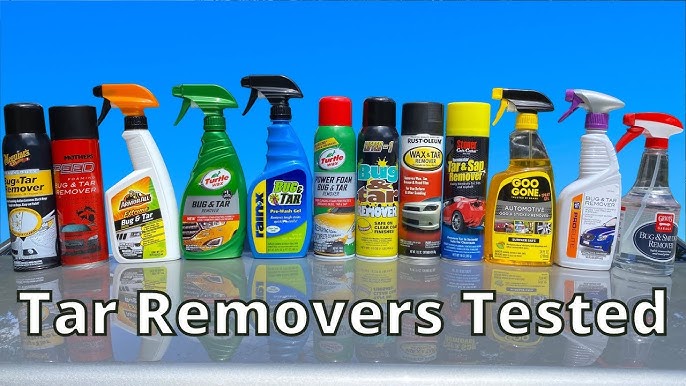
Chemical solvents soften and dissolve tar, making removal significantly easier for stubborn deposits. The right choice depends on availability, severity of buildup, and your comfort handling various products.
Commercial Tar Removers
Products specifically designed for tar removal deliver consistent results with minimal risk to your tire. Turtle Wax Tar and Bug Remover works reasonably well and is widely available at auto parts stores. More specialized options like Car Pro’s Tar-X and DuPont prep-sol earn high marks from detailing professionals for effectiveness on stubborn deposits. The Stoner Tarminator excels at dissolving thin tar layers, making it ideal for regular maintenance cleaning.
3M adhesive remover has become a favorite among enthusiasts for spring tire cleaning. Apply it with a microfiber applicator and label the container to keep it dedicated for this purpose. These commercial products balance effectiveness with relative safety for tire rubber when used according to directions.
Household and Automotive Solvents
Common products already in your garage or household work surprisingly well for tar removal. WD40 breaks down tar’s bond effectively, though it primarily softens rather than dissolves completely—follow with a Dawn dish soap wash to remove residue. Goo Gone, designed for sticky substances, offers another accessible option available at most hardware stores.
A mixture of kerosene and water in approximately a 30/70 ratio provides powerful tar-dissolving action that professionals have used for decades. However, kerosene is flammable and can degrade rubber if left in contact too long, so use it cautiously. RP-7 disperses tar and road film effectively, while 50/50 diluted all-purpose cleaner works well when applied with a foaming spray bottle.
Complete Step-by-Step Removal Process
Follow this comprehensive procedure for thorough tar removal that protects your tire’s condition while eliminating stubborn buildup.
Park on a flat surface and engage your parking brake before beginning. Remove all loose gravel and debris from the tire treads using your hands or a soft brush. For thick tar deposits, perform initial scraping with your plastic or rubber scraper to remove the bulk of material. Apply warm soapy water—mild detergent mixed with warm water—to soften remaining tar and prepare the surface.
Apply your chosen solvent or oil-based treatment next. For commercial tar removers, follow product directions for application and dwell time. Oil treatments need generous application and 25 to 30 minutes of penetration time. Solvent-based approaches like kerosene or APC mixtures should be worked in small sections without allowing them to dry. Use your rigid scrub brush with detergent to agitate stubborn residue, applying firm pressure as needed.
Once tar has loosened or dissolved, rinse thoroughly with clean water while scrubbing to remove remaining residue. Inspect the tire carefully, checking tread grooves and siping for any remaining material. Dry with a clean microfiber cloth to prevent water spots. Finally, examine the tire for any damage such as cracks, cuts, or uneven wear that may have developed during cleaning or existed previously.
When to Seek Professional Help
Professional services offer the most thorough removal for severe cases or when you simply don’t want to tackle the job yourself. Tire dealerships and some independent shops perform tar removal using proper tools and techniques. One customer reported paying $25 for their dealer to perform scraping service while the vehicle was on a lift, providing better access to all tire areas. The technician’s experience resulted in more complete removal than most DIY attempts achieve.
Before committing to professional service, ask about their specific methods and get a price quote. Consider the severity of your tar accumulation and the condition of your tires—severe buildup on relatively new tires justifies professional attention, while lighter deposits on older tires might make replacement more economical.
Crucial Safety Precautions
Working with chemical solvents requires proper safety measures to protect yourself and your vehicle. Always work in well-ventilated areas to avoid fume accumulation. Wear rubber gloves to prevent skin contact with harsh chemicals, and protect your eyes from splashes. Never allow solvents to dry on painted surfaces, as this increases damage risk—apply, work quickly, and rinse thoroughly.
Flammable products like kerosene and gasoline must stay away from heat sources and open flames. A tire with gasoline residue could potentially catch fire, making thorough rinsing absolutely essential. Consider the impact on surrounding materials—solvents that remove tar may also strip wax and protective coatings from painted surfaces. After any chemical treatment, wash the area thoroughly with water and detergent to neutralize residue that could continue reacting with rubber over time.
Prevent Future Tar Buildup
Regular inspection every few weeks, particularly after driving on freshly paved roads, helps catch tar accumulation before it becomes severe. Pay special attention to the base of tread grooves where material tends to collect. During routine tire rotation, take the opportunity to inspect and clean treads more thoroughly.
Complete prevention isn’t practical when driving on treated roads, but parking on street surfaces rather than driveways prevents tar from dropping onto home paving. Keeping tires clean and well-maintained may reduce the adhesive quality of rubber somewhat. Some tar accumulation resolves naturally through normal driving—highway speeds and tire flex gradually wear away surface material. However, this process can take several weeks and doesn’t address deeply embedded tar. During any waiting period, drive at reduced speeds to minimize the risk of dislodged tar damaging your paint.
Key Takeaways
Removing tar from your tire works best when you combine appropriate methods based on severity. For light to moderate buildup, physical scraping with a dull tool or dry ice hardening provides effective, chemical-free solutions. Stubborn deposits respond well to commercial tar removers or household solvents like WD40 and Goo Gone. Oil-based solutions like linseed oil offer safe, natural alternatives for those preferring to avoid chemicals entirely.
Reserve strong solvents for truly stubborn cases, and always prioritize safety through proper ventilation, glove use, and thorough rinsing. Professional removal services cost approximately $25 to $50 for severe cases, making them worthwhile when DIY efforts prove insufficient or when your tires are relatively new. Regular inspection and prompt attention to new tar deposits prevents buildup from becoming severe enough to affect your tire’s balance or performance. Remember that some tar accumulation will naturally wear away through driving, but proactive removal ensures optimal tire performance and prevents potential paint damage from dislodged chunks.