Finding your vehicle immobilized with a tire boot triggers immediate panic. That hardened steel clamp wrapped around your wheel transforms a simple parking violation into a mobility crisis within hours. Many drivers frantically search “how to remove tire boot” online, hoping for a quick DIY solution. What they don’t realize is that parking boots are engineered specifically to resist unauthorized removal, and attempting to bypass the system often escalates minor fines into thousands in additional penalties. This guide reveals the only legal methods for tire boot removal, explains why cutting or prying won’t work, and provides actionable strategies to resolve your situation without compounding the problem.
The truth is simple: properly removing a tire boot requires authorization from the issuing authority. These devices incorporate hardened steel construction, specialized locking mechanisms, and tamper-resistant fasteners that make unauthorized removal both technically challenging and legally dangerous. Understanding this reality saves you from making costly mistakes that transform a manageable parking violation into a criminal matter. By following the legally compliant methods outlined in this article, you’ll resolve your tire boot situation efficiently while avoiding the severe consequences that await those who attempt shortcuts.
Why Cutting Your Tire Boot Off Will Cost You Thousands

Attempting to cut through your tire boot with angle grinders or hydraulic cutters might seem like a quick solution, but this approach triggers devastating consequences that far exceed your original parking fines. Parking boots use industrial-grade hardened steel specifically designed to resist cutting tools, meaning your removal attempt will likely fail while simultaneously triggering legal repercussions. Modern boots often incorporate tamper detection systems that sound alarms or notify authorities the moment someone interferes with the device.
If you successfully cut the boot off, you’ll face immediate vehicle impoundment when enforcement officers discover the violation. Retrieval costs typically include $200-$500 in towing fees plus $50-$150 per day in storage charges that accumulate rapidly. You’ll also incur additional fines for boot tampering that often range from $500 to $2,000—substantially more than the original parking violation. In many jurisdictions, unauthorized removal constitutes a criminal offense that can result in misdemeanor charges carrying potential jail time and a permanent criminal record that affects future employment and housing opportunities.
Critical warning: Never attempt to cut, pry, or otherwise force removal of a tire boot. The financial and legal consequences transform a minor inconvenience into a life-altering situation. One frustrated driver in Chicago recently spent over $4,000 in impound fees and legal costs after attempting to remove a $120 boot with bolt cutters—a mistake that took six months to resolve.
How to Identify Your Parking Boot Before Taking Action

Before contacting authorities, verify you’re dealing with a legitimate parking boot rather than an improvised clamp or private wheel lock. Genuine parking boots display clear identifying information that determines which agency you must contact for removal. Examine the device carefully for municipal logos, enforcement agency names, or private company branding typically stamped into the metal housing.
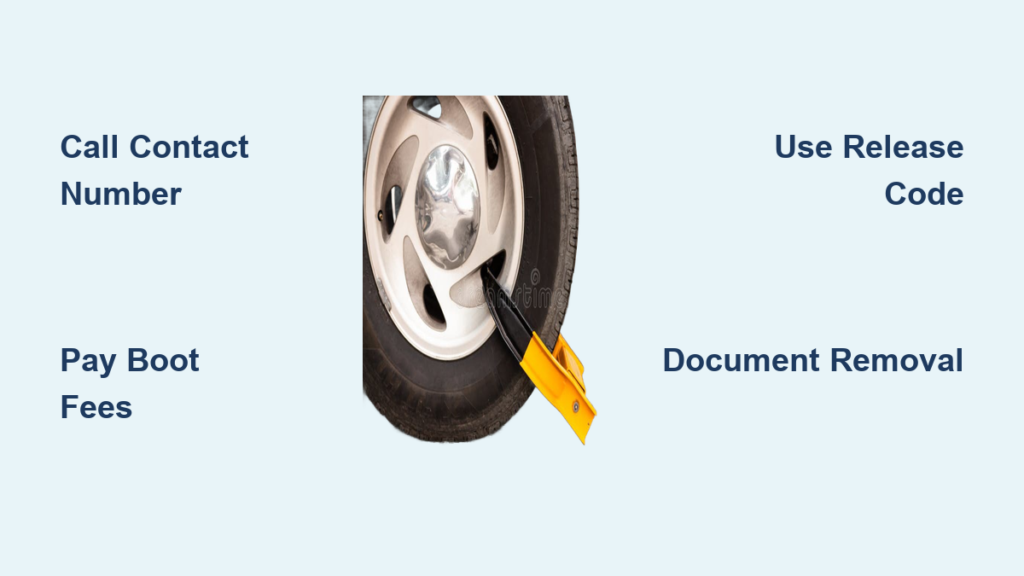
Most legitimate boots feature a prominently displayed toll-free phone number for resolution and a unique identification number etched into the lock mechanism or main body. Take photos of these details from multiple angles before touching the device—this documentation proves vital if disputes arise later. Notice the boot’s construction: professional parking boots use thick, reinforced steel arms that clamp around your wheel rim with a secure locking mechanism protected by a shielded cover.
Pro tip: Compare your boot against online images of legitimate devices from your city’s parking enforcement website. Many municipalities publish photos of their official boots to help drivers distinguish them from counterfeit or unauthorized devices. This verification prevents wasting time contacting the wrong agency and ensures you follow the proper removal procedure.
Where to Find the Boot Removal Contact Number on Your Tire
The key to legal tire boot removal lies in the contact information physically attached to the device. Unlike improvised clamps, legitimate parking boots always display clear instructions for resolution directly on the unit. Most feature a metal plate or durable sticker showing a dedicated phone number specifically for boot removal inquiries—this number differs from general parking enforcement lines and connects you directly to the department handling boot releases.
Check the boot’s vertical arm facing outward from your vehicle—this location ensures visibility even when the car is parked tightly between others. Some newer models incorporate QR codes that, when scanned, connect you to an online payment portal for immediate resolution. If you don’t see contact information on the boot itself, check your windshield for a violation notice that should reference the booting authority and provide contact details.
Critical step: Never assume the contact number belongs to a scam operation. Legitimate booting authorities intentionally make their contact information visible to facilitate legal removal. The phone number on the boot represents your fastest path to regaining vehicle access—calling this number immediately begins the resolution process rather than wasting hours searching online for “how to remove tire boot” hacks.
Paying Boot Fees: Your Only Legal Removal Option Explained
Resolving the underlying violation that triggered the boot application represents your sole legal path to removal. This process typically requires paying outstanding parking fines plus additional administrative fees that accumulate during the boot application process. Most authorities charge $100-$250 in boot-specific fees on top of any original violations, with costs increasing the longer the boot remains in place.
Payment options vary by jurisdiction but generally include:
– Online payment through the authority’s official website
– Phone payment using credit/debit cards
– In-person payment at designated payment centers
– Mobile payment through authorized parking apps
Time-sensitive action: Many cities offer “boot release windows” where same-day removal occurs if payment is made before a specific cutoff time (usually 2-4 PM). After this window closes, you’ll wait until the next business day for removal, potentially stranding you overnight. Some jurisdictions provide extended hours specifically for boot-related payments—ask about these options when you call the contact number.
Critical warning: Never pay anyone offering “boot removal services” outside official channels. Scammers frequently target distressed drivers with promises of quick removal for cash payments. These operations are illegal and leave you vulnerable to additional fines when authorities discover the unauthorized removal.
Self-Removal Codes: When You Can Actually Take Off Your Own Boot
Certain jurisdictions now implement technology that allows authorized self-removal after payment verification, eliminating the wait for a technician. These systems provide a unique release code either via text message or through an online portal after you’ve paid all outstanding fees. The code activates the boot’s electronic release mechanism, allowing you to detach the device yourself in under two minutes.
To use this feature:
1. Complete all required payments through official channels
2. Receive your release code via the method specified by the authority
3. Enter the code using the keypad on the boot’s lock mechanism
4. Release the locking mechanism by turning the handle as instructed
Pro tip: Not all municipalities offer self-removal—ask specifically about this option when you contact the booting authority. If available, this method typically provides the fastest resolution, often allowing you to regain vehicle access within 15-30 minutes of payment confirmation. Keep your smartphone charged and accessible during the payment process to receive immediate code delivery.
Documenting Boot Removal: Proof You Need After Legal Resolution
Always request written confirmation that your tire boot has been legally removed and all violations resolved. This documentation should include the boot identification number, date and time of removal, authorizing agency name, and a statement confirming settlement of all outstanding issues. Authorities typically provide this through email receipt, printed confirmation, or a digital record accessible through their online portal.
Store this documentation with your vehicle records for at least one year. If any questions arise later about the incident or if the boot somehow reappears, you have proof of proper resolution. In cases where payment was made under protest due to mistaken boot placement, this documentation supports your claim for reimbursement if the error is later confirmed.
Critical step: Take photos of the removed boot next to your vehicle showing the detached state. This visual evidence proves the boot was properly removed through authorized channels if any disputes arise later. Many drivers regret not documenting this step when administrative errors cause repeat booting incidents.
Avoiding Future Tire Boots: Parking Habits That Prevent Clamping
The most effective “how to remove tire boot” strategy involves never needing one in the first place. Implement these preventive measures to avoid future immobilization:
Address violations immediately: Many municipalities offer 5-10 day grace periods for paying parking tickets before boot eligibility begins. Check your city’s online violation portal weekly to catch tickets early.
Set parking timers: Use smartphone alarms or dedicated parking apps that alert you 5-10 minutes before time expires in metered or time-limited zones.
Verify overnight parking rules: Never assume overnight parking is permitted—research local regulations thoroughly before leaving your vehicle unattended.
Keep registration current: Outdated vehicle registration information with the DMV causes administrative errors that lead to mistaken boot placements.
Pro tip: Photograph parking signs when you park in unfamiliar areas. This visual record protects you if disputes arise about posted restrictions. Many cities now offer mobile apps that provide real-time information about parking regulations in specific zones.
Why “How to Remove Tire Boot Without Key” Searches Lead to Disaster
Online searches for “how to remove tire boot without key” or “tire boot removal hacks” consistently lead drivers toward dangerous misinformation. These methods—ranging from improvised pry bars to chemical solvents—fail against modern boots’ hardened steel construction while exposing you to severe legal consequences. Parking enforcement agencies track these search trends and specifically design boots to resist the removal techniques most commonly suggested in online forums.
The reality is that legitimate boot removal keys and codes remain strictly controlled by issuing authorities. No “secret trick” bypasses these security measures without triggering tamper detection systems. Each failed removal attempt adds time to your immobilization and increases potential penalties. Rather than wasting hours searching for shortcuts, contact the number on the boot immediately—this direct approach typically resolves the situation faster than any attempted DIY method.
Final reality check: The average cost to legally resolve a tire boot situation ranges from $150-$400. The average cost when unauthorized removal is attempted? Over $2,500 in impound fees, legal costs, and additional penalties. Your vehicle’s mobility isn’t worth risking your financial stability or legal standing. Work within the system—contact the authority, pay the required fees, and obtain authorized removal. This straightforward approach preserves your mobility without compounding the original problem.