That persistent amber light on your dashboard isn’t just a nuisance—it’s your vehicle’s way of telling you something’s wrong with your tire pressure monitoring system. When your TPMS warning light stays illuminated, it means your car has detected abnormal pressure in one or more tires, which can compromise safety, fuel efficiency, and tire longevity. The good news is that many TPMS issues can be resolved without expensive dealership visits. Whether you’re dealing with a sensor that won’t reset after inflation, a dead battery, or a system that needs relearning after tire rotation, this guide provides practical solutions you can implement yourself.
Understanding how to address these common problems saves you both time and money while ensuring your vehicle maintains optimal safety performance. By following these systematic troubleshooting steps, you’ll gain the confidence to diagnose and fix most tire pressure sensor issues, keeping your TPMS functioning correctly and your tires properly inflated for safer, more efficient driving.
Decode Your TPMS Warning Light Patterns
Your vehicle’s TPMS warning light behavior provides crucial diagnostic information before you touch a single tool. Most vehicles display this indicator as a flat-bottomed U-shape with an exclamation point, typically illuminating in amber or yellow. Learning to interpret its patterns prevents wasted effort on unnecessary repairs and directs your troubleshooting to the actual problem.
When the light glows steadily without flashing, your system has detected at least one tire with pressure approximately 25% below the recommended level—usually indicating simple underinflation that requires checking and adjusting tire pressures. However, if the light flashes for 60 to 90 seconds before settling into a steady glow, this signals a system malfunction rather than a pressure issue. This critical distinction means you’re dealing with sensor failure, wiring problems, or module faults that require more advanced troubleshooting.
Many modern vehicles enhance this basic warning with additional diagnostic information through the instrument cluster or infotainment system, specifically identifying which tire is triggering the alert. If your vehicle provides this feature, immediately focus your efforts on the indicated tire rather than checking all four wheels unnecessarily. Without this specificity, develop a systematic approach to checking each tire in sequence, documenting readings to identify patterns that might reveal intermittent sensor issues.
Perform Initial Pressure Verification
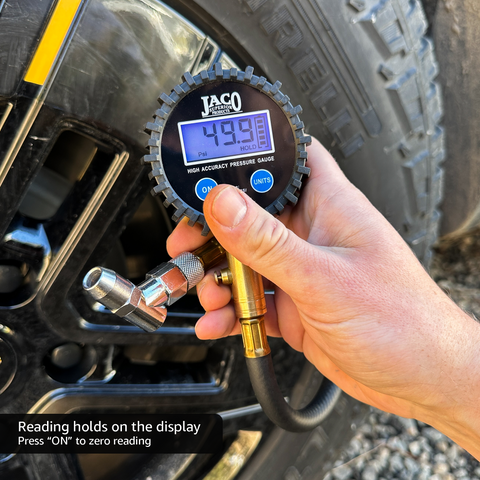
Begin your TPMS troubleshooting with the most straightforward solution: verifying actual tire pressures using a reliable digital gauge. Tires can lose 1-2 PSI monthly under normal conditions, and temperature fluctuations significantly impact pressure—approximately 1 PSI for every 10°F temperature change. Relying solely on visual inspection often misses these subtle but critical variations.
Locate your vehicle’s specific pressure recommendation, typically found on a sticker inside the driver’s door jamb, in the owner’s manual, or occasionally on the fuel door. Never confuse this with the maximum pressure rating molded into the tire sidewall, which represents the tire’s capacity, not your vehicle’s optimal operating pressure. Check all tires when cold—meaning the vehicle hasn’t been driven for at least three hours or has covered less than one mile at moderate speeds—for accurate readings.
After inflating any under-pressurized tires to the specified level, drive for several minutes at speeds above 15-20 mph to allow the system to register the updated readings. Many vehicles automatically reset the TPMS light once proper pressure is confirmed during normal driving conditions. If the warning light persists despite correct inflation, you’ve confirmed a sensor or system issue rather than a simple pressure problem, moving you to the next diagnostic phase.
Check for Temperature-Related False Alarms
Cold mornings frequently trigger false TPMS warnings due to overnight temperature drops reducing tire pressure. Before assuming sensor failure, monitor the light after driving for 15-20 minutes—the natural warming of tires typically increases pressure by 3-5 PSI, often sufficient to clear the warning. If the light disappears during normal driving but reappears overnight, temperature fluctuations are likely the culprit rather than a faulty sensor.
Inspect Sensors for Physical Damage and Leaks
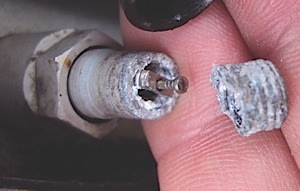
Physical examination of your valve stems reveals problems that pressure checks alone cannot detect. Your TPMS sensors reside inside each wheel assembly, either integrated with the valve stem or band-mounted inside the tire. While the internal sensor requires tire removal for full inspection, the external valve stem components are accessible for immediate assessment.
Examine each valve stem for corrosion, particularly in regions where road salt is used during winter. Green or white buildup around the valve stem base and core indicates corrosion that can cause slow air leaks or interfere with sensor electronics. Missing or damaged valve stem caps accelerate this corrosion and allow moisture entry—replace any compromised caps immediately. Also check the valve stem nut that secures the sensor; a loose or missing nut can cause shifting that creates air leaks at the seal.
Conduct a Soap Solution Leak Test
Create a simple leak detection solution by mixing dish soap with water in a spray bottle. With tires properly inflated, spray this solution generously around each valve stem base, along the tire bead where it contacts the wheel, and around any visible tire damage. Carefully observe for bubble formation, which indicates escaping air.
If bubbles appear at the valve stem, use a valve core tool to gently tighten the core—over-tightening can damage it. Recheck for leaks after adjustment. Persistent bubbling around the valve stem base suggests a compromised seal requiring valve stem replacement. Small bead leaks might be correctable by a professional with fresh sealant, but significant leaks typically necessitate tire replacement.
Reset and Relearn Your TPMS System
Many persistent TPMS issues resolve through proper system reset or relearn procedures, which reprogram your vehicle to recognize each sensor’s unique ID and location. This becomes essential after tire rotation, sensor replacement, or following battery disconnections that disrupt system memory.
The relearn procedure varies significantly by manufacturer. General Motors vehicles often require turning the ignition to “ON” without starting, pressing and holding the TPMS reset button (typically under the dash) until the light flashes three times, then activating each sensor in sequence clockwise starting with the driver’s front tire. Ford models may need specific ignition cycle sequences, while Toyota and Honda usually employ button-press combinations unique to each model.
Consult your owner’s manual for the exact procedure—attempting incorrect methods may confuse the system or fail to complete the relearn process. Some vehicles require specialized TPMS activation tools to send signals to each sensor during the relearn sequence, available at most auto parts stores for loan or affordable purchase.
Replace Faulty TPMS Sensors When Necessary
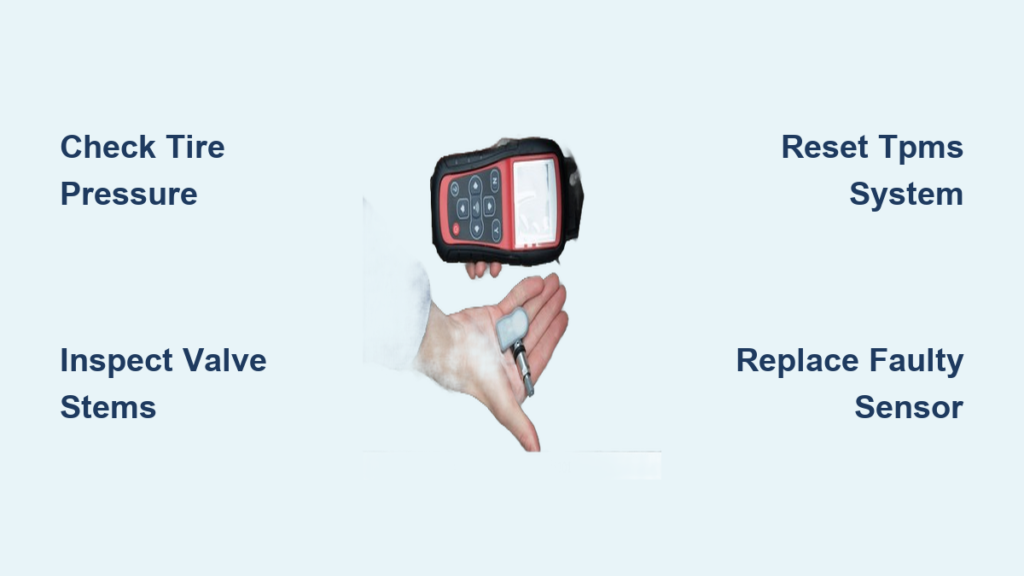
When diagnostics confirm a specific sensor has failed, replacement becomes unavoidable. TPMS sensors aren’t serviceable units—once the battery depletes (typically after 7-10 years) or electronic components fail, the entire assembly requires replacement.
Selecting the correct replacement involves considering your vehicle’s make, model, and year, which determine sensor frequency (315 MHz for most domestic vehicles, 433 MHz for many Asian and European models). Some vehicles require pre-programmed sensors with specific IDs, while others accept universal sensors that can be programmed with dedicated tools. Consult your vehicle documentation or a reputable parts supplier to ensure compatibility.
The replacement process involves tire removal from the wheel—most DIYers opt to have a tire shop handle this step. After installing the new sensor, the vehicle must complete a relearn procedure so the system recognizes the replacement. Some shops include this programming in their service price, while others charge separately, so clarify this before authorizing work.
Prevent Future TPMS Issues Through Proactive Maintenance
Once your system functions correctly, implement these preventive measures to extend sensor life and avoid recurrence. Always use quality valve stem caps to protect against moisture and debris entry—replace cracked or difficult-to-tighten caps immediately. During tire rotations every 5,000-8,000 miles, request that technicians inspect sensor mounting and valve stem condition.
If your vehicle uses valve-stem-mounted sensors, ensure the retaining nut maintains proper torque—not too loose to cause shifting, nor over-tightened to damage components. When replacing tires approaching the 7-10 year mark, consider simultaneous sensor replacement to avoid near-future failures. Avoid tire sealants whenever possible, as their chemicals often damage sensor electronics—plan sensor inspection if emergency sealant use becomes necessary.
Address TPMS warnings promptly rather than ignoring them; timely attention frequently transforms what could become a costly sensor replacement into a simple pressure adjustment or reset procedure, maintaining both safety and system reliability.
When your TPMS warning light appears, systematic troubleshooting prevents unnecessary expenses while ensuring road safety. By understanding warning light patterns, verifying actual pressures, inspecting for physical issues, and properly resetting your system, you resolve most common problems without professional assistance. For persistent issues indicating sensor failure, timely replacement maintains your vehicle’s ability to alert you to dangerous underinflation conditions. Implementing preventive maintenance extends sensor life and avoids unexpected failures, keeping your tire pressure monitoring system functioning reliably for safer, more efficient driving. Remember that properly maintained TPMS not only protects your safety but also maximizes tire life and fuel economy—making these troubleshooting skills valuable for any vehicle owner.