That sudden thump followed by a sinking feeling as your tire pressure warning light flashes—it’s a scenario every driver dreads. Instead of immediately reaching for your wallet to buy a replacement tire, understanding the different types of tire patches available could save you hundreds of dollars while keeping you safely on the road. A properly executed patch repair can restore your tire’s integrity for thousands of additional miles, making it essential to know which patch type matches your specific puncture scenario and vehicle requirements.
The reality is not all tire patches work equally well for every situation. Using the wrong patch type can lead to air leaks, compromised safety, and wasted money when the repair fails prematurely. This guide cuts through the confusion by breaking down every major category of tire patch available on the market today—from affordable DIY solutions to professional-grade commercial repair systems—so you can make the right choice for your specific tire emergency.
Why Round Patches Dominate Basic Tire Repairs
Round patches remain the most common types of tire patches for good reason—their circular design distributes stress evenly around the puncture site as your tire flexes during driving. This geometry creates a reliable seal that withstands normal road conditions, making them ideal for straightforward punctures from nails or screws in passenger vehicles.
The AA 10-050 Round Universal Tire Repair Patches represent the most budget-friendly option at just $8.79, perfect for occasional DIY repairs on passenger cars and light trucks. While economical, these patches lack radial-specific engineering, so they work best for minor punctures within the tire tread’s center zone—not near the sidewall.
For better performance on modern radial tires, upgrade to the AAValueline VL10-100 Round Universal Radial Tire Patch at $11.50. These patches account for the unique steel belt construction of radial tires, providing enhanced adhesion that prevents premature separation as the tire heats up during highway driving. Never use round patches for punctures larger than ¼ inch—this exceeds their effective sealing capacity and risks dangerous air leakage.
Radial-Specific Patches: Essential for Modern Tires
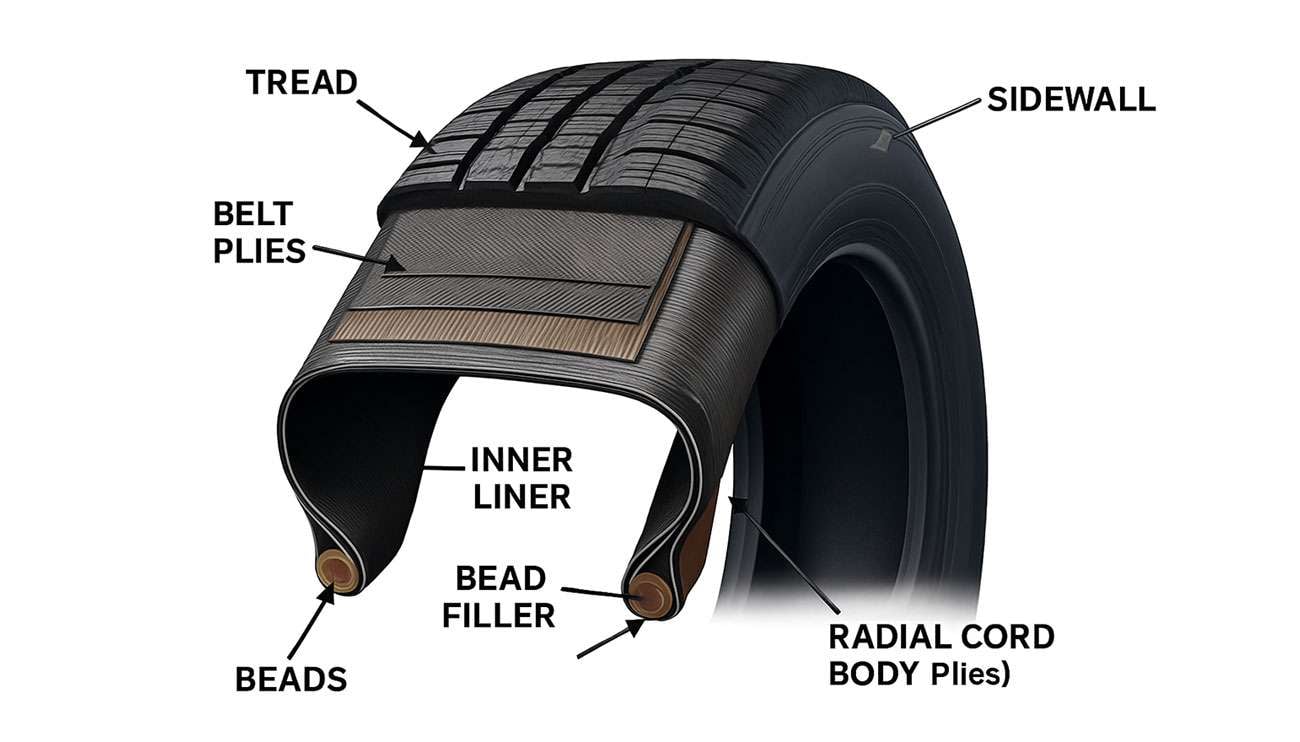
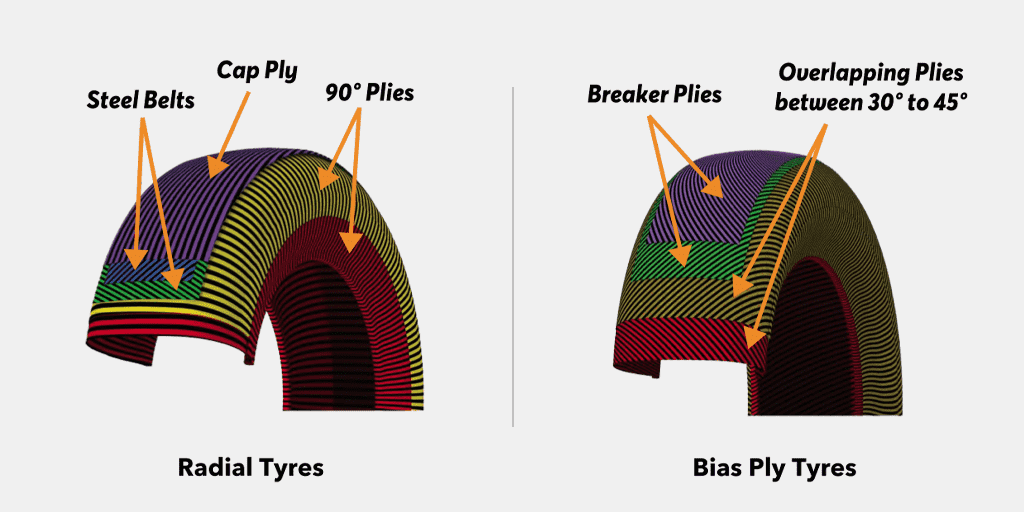
Most passenger vehicles today use radial tire construction, which requires specialized patches designed for their unique stress patterns. Unlike bias-ply tires, radials feature steel belts running perpendicular to the direction of travel, creating different flex characteristics that standard patches can’t accommodate properly.
The Rema RAD-110 Radial Repair Patches at $46.95 per box of 20 are engineered specifically for car and light truck radial applications. Their formulation addresses the movement between steel belts and sidewalls, preventing the patch from separating as the tire heats up during extended driving. These patches deliver significantly longer repair life compared to universal options when used on radial tires.
For commercial applications, the Prema PR-140 Radial Tire Repair Patch offers premium protection at $97.95 for ten patches. Its 3-ply construction spanning 7.75 x 4.75 inches provides substantial reinforcement for heavy loads, making it ideal for trucks and equipment that operate under extreme conditions. Warning: Using non-radial patches on radial tires often fails within weeks due to incompatible stress distribution.
Heavy-Duty Patches for Trucks and Equipment
Commercial vehicles demand patches that can withstand extreme loads, higher operating temperatures, and more severe puncture scenarios. Standard passenger tire patches simply can’t handle the stress imposed by heavy equipment, making specialized heavy-duty options essential for fleet maintenance.
The Rema RAD-115 Radial Repair Patches at $56.95 target truck, tractor, grader, and forklift operations specifically. These patches accommodate the increased loads and higher temperatures typical of commercial vehicle operation, with reinforced construction that maintains integrity even after repeated stress cycles. Their radial-specific engineering ensures proper performance on the steel-belted constructions common in commercial truck tires.
For budget-conscious fleet operators, the AAValueline VL14-110 HD Radial Tire Patch at $14.95 provides professional-grade performance at accessible pricing. While not as robust as premium options, these patches deliver reliable service for standard commercial applications when properly installed. Critical note: Heavy-duty patches require more thorough tire preparation—skimping on surface cleaning or buffing dramatically reduces repair longevity.
Bicycle and Motorcycle Patch Solutions
Smaller pneumatic vehicles require appropriately scaled repair solutions. Bicycle and motorcycle patches address the unique requirements of these vehicles, including smaller puncture sizes, different rubber formulations, and distinct repair accessibility challenges.
The Rema RE-F0-P Round Red Edge Patches serve bicycle, motorcycle, and passenger car applications uniformly at $16.95. Their compact size works perfectly for thorn punctures in bicycle tires or small nail holes in motorcycle tires. When repairing bicycle tires, always apply cement to both the tire inner tube and patch—this double-coating technique ensures maximum adhesion on thinner rubber.
Motorcycle applications present additional challenges due to higher operating temperatures and increased vibration. While the same Rema patches serve these needs, technicians should allow extra curing time for the cement to fully set before reinflating. Premium patch selection becomes more important for high-performance motorcycles operating at elevated speeds where repair failure could have serious consequences.
When to Use Patch-and-Plug Combination Units

Some puncture scenarios benefit from hybrid repair approaches that combine traditional patches with plug insertion. These combination units address both the internal air seal and the physical hole through the tire body, providing comprehensive repair capability for challenging injury types.
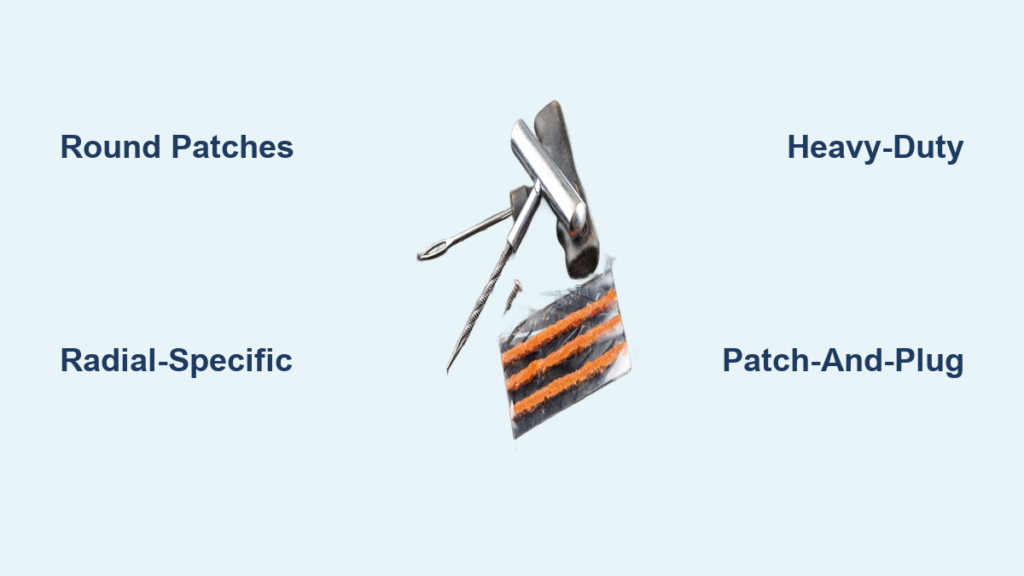
The AA 15-140 Round Patch-N-Plug for Radial/Bias Tire represents this hybrid approach at $24.95. The plug component seals the physical puncture channel while the patch creates the internal air retention barrier—ideal for larger punctures where the hole’s diameter exceeds 3/8 inch. Use combination units only for tread area punctures—never attempt them on sidewall damage, which requires tire replacement.
The Rema UP8 Universal Repair Unit accommodates 5/16-inch injuries with a 2-3/16-inch plug dimension, pricing from $91.50. This unit serves situations where the puncture channel requires structural support beyond what patch adhesion alone provides, such as jagged wounds from broken glass or irregular road debris. The additional material cost is justified when dealing with complex puncture geometries that standard patches can’t reliably seal.
Choosing the Right Patch Size for Your Puncture

Patch dimensions must correspond appropriately to puncture severity—not just tire size. Using undersized patches risks incomplete sealing and premature failure, while excessive patch size introduces unnecessary material bulk and preparation complexity.
Small-format patches like the Xtra-Seal 13-375 measuring 1-5/8″ x 2-7/8″ handle minor punctures in passenger car and motorcycle applications where larger patches would be excessive. These compact dimensions simplify application in tight spaces and reduce material waste for small repairs.
For standard passenger car punctures from nails or screws, medium-sized patches in the 3-4 inch range provide ideal coverage. Products like the AA 10-050 and AAValueline VL10-100 fall into this category, balancing coverage area with application convenience for common repair scenarios.
Large-format patches like the Prema PR-140 spanning 7.75 x 4.75 inches address commercial vehicle requirements and larger injury scenarios. The substantial coverage area ensures complete sealing around significant punctures while providing structural reinforcement for heavy-load applications. Remember: Injury size compatibility, not tire size alone, should guide patch selection—a large patch on a small tire creates installation challenges and potential interference with tire construction.
Key Takeaways for Selecting the Right Tire Patch
Choosing appropriate types of tire patches requires matching product specifications to your vehicle type, puncture severity, and performance requirements. Round patches serve as versatile solutions for straightforward punctures, while radial-specific patches prevent premature failures from inappropriate material selection on modern tires.
For passenger vehicles, prioritize radial-specific patches like the Rema RAD-110 or AAValueline VL10-100 to ensure compatibility with your tire’s construction. Commercial operators should invest in heavy-duty patches such as the Prema PR-140 or Rema RAD-115 to withstand the demands of fleet operation. When facing complex puncture geometries, consider patch-and-plug combination units for comprehensive repair capability.
Always verify patch compatibility with your tire’s construction and puncture location—repairing sidewall damage or using incompatible patches creates safety risks that outweigh any cost savings. Proper tire patch selection combined with correct application techniques delivers reliable, long-lasting repairs that keep you safely on the road while maximizing your tire investment.