Getting stuck in deep mud or watching your ATV struggle through soft sand can ruin an otherwise perfect riding day. The right tires make the difference between conquering challenging terrain and calling for help. Understanding the distinct ATV tire types available—and matching them to your specific riding conditions—ensures optimal performance, safety, and value from your investment.
This comprehensive guide breaks down every major ATV tire category, examining tread patterns, construction specifications, terrain compatibility, and performance characteristics. Whether you ride primarily on muddy trails, sandy dunes, rocky terrain, or a mix of everything, you’ll find the specific information needed to make an informed purchase decision that transforms your off-road experience.
Mud Terrain ATV Tires

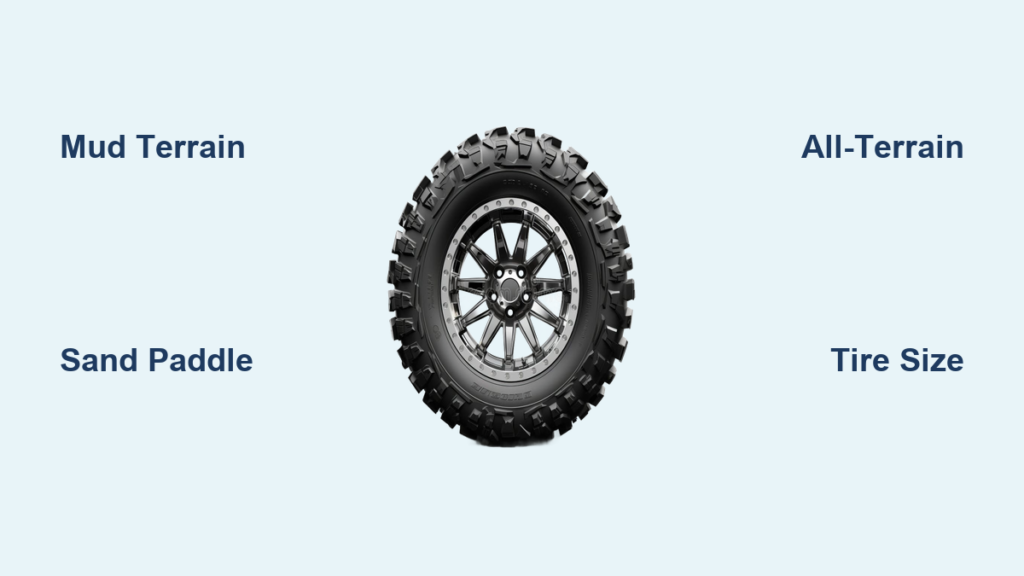
Mud terrain tires represent the most specialized category, engineered specifically to excel in deep, sticky conditions that leave other tires helpless. These tires feature aggressive tread patterns with deep, widely-spaced lugs that dig into mud and self-clean as the tire rotates, preventing the accumulation of sticky debris that robs traction.
The lug height on mud tires significantly exceeds that of other categories, often measuring 1.5 to 2 inches or more in depth. This depth allows the tire to reach firmer ground beneath surface mud while creating a paddle effect that propels the vehicle forward. The spacing between lugs is critical—wide spacing prevents mud from packing into the tread grooves, while the aggressive angularity of the lug edges bites into soft terrain.
Mud tire construction typically features reinforced sidewalls to withstand the stress of powering through resistance. The additional material in sidewall plies prevents the tire from collapsing under lateral forces during aggressive cornering in muddy conditions. Many mud tires also incorporate reinforced bead areas to maintain proper tire-to-rim seal during low-pressure operation, which is common when maximizing flotation in soft conditions.
Why Standard Tires Fail in Deep Mud
Standard all-terrain tires quickly become ineffective in deep mud because their lugs pack with mud rather than shedding it. When mud fills the spaces between lugs, the tire loses its ability to grip new terrain with each rotation. The continuous center tread common on all-terrain tires creates a solid surface that simply slides across mud rather than digging in. Riders attempting deep mud with standard tires frequently find themselves stuck within minutes as the tires lose all traction.
Optimal Mud Tire Pressure Settings
Finding the right inflation pressure makes or breaks mud tire performance. Most riders achieve best results between 5-8 PSI in mud conditions, though specific terrain may require adjustments. Lower pressure increases the contact patch and allows the tire to “wrap” around obstacles for better grip. However, going too low risks bead separation from the rim, especially during aggressive cornering. Always carry a portable air compressor to reinflate tires for the ride home on harder surfaces.
Sand ATV Tires
Sand tires operate on an entirely different principle than other ATV tire types, utilizing paddle-style tread designs that function like paddles or sails to propel the vehicle across loose surfaces. These tires are essential for dune riding and beach applications where standard tread patterns simply sink and bog down.
The defining characteristic of sand tires is their paddle or scoop-shaped lugs that project outward from the tire surface. As the tire rotates, these paddles push against the sand, creating the forward propulsion needed to maintain speed and momentum. The spacing between paddles is wide, allowing sand to fall through rather than packing into the tread area. Some sand tire designs feature directional paddles that maximize thrust in forward rotation while reducing resistance during the return cycle.
Sand Tire Pressure Requirements
Sand tires require higher inflation pressures than other ATV tire types, often in the 12-15 PSI range compared to the 5-8 PSI common for trail riding. The increased pressure prevents the tire from burying itself in soft sand and allows the tread paddles to function effectively. However, this higher pressure makes sand tires unsuitable for rocky terrain where puncture risk increases significantly. Never attempt rocky trails with sand tires inflated to dune pressures.
Paddle Design Differences for Various Sand Conditions
Not all sand is created equal, and tire selection should match the specific conditions you’ll encounter. Fine, powdery sand requires larger paddles with greater surface area to displace more material with each rotation. Wet, packed sand benefits from slightly smaller paddles that can dig in without excessive resistance. Some premium sand tires feature adjustable paddle systems that allow riders to modify paddle size and angle based on current conditions.
All-Terrain ATV Tire Performance
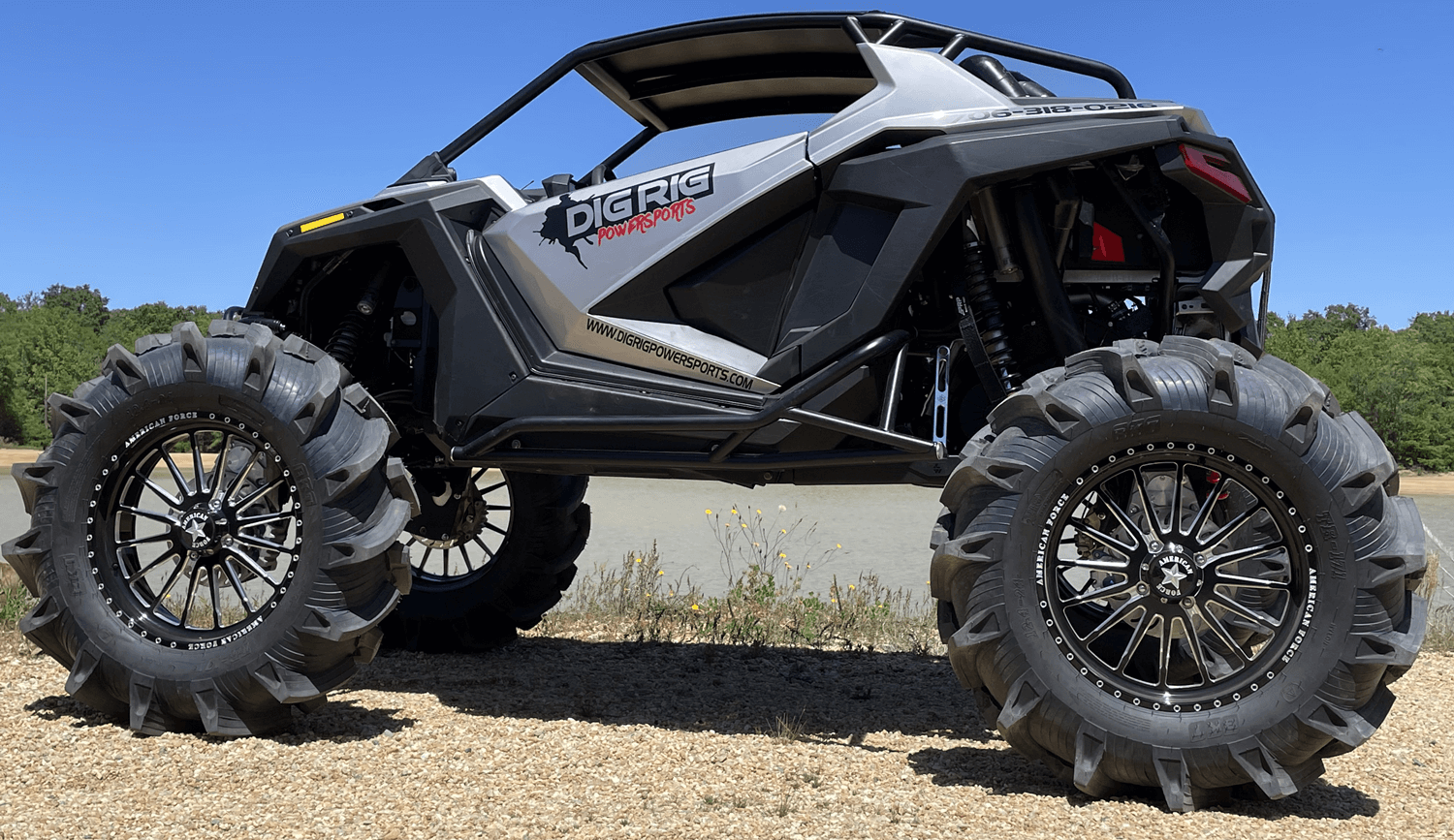
All-terrain ATV tires represent the most versatile option for riders who tackle varied conditions without committing to specialty tires. These tires feature a balanced tread pattern that performs adequately across multiple surfaces, making them ideal for recreational riders, trail enthusiasts, and those who ride on property with changing terrain conditions.
The tread design on all-terrain tires typically incorporates intermediate lug height positioned at strategic angles to provide grip on hard-packed trails while still offering moderate mud-shedding capability. The center tread usually runs continuously to maintain straight-line stability and reduce road noise during transitions between off-road and on-road riding. Side lugs are aggressive enough to provide cornering traction but not so pronounced that they paddle effectively through deep mud.
When All-Terrain Tires Fall Short
While versatile, all-terrain tires have clear limitations in extreme conditions. In deep mud exceeding 6-8 inches, the lug spacing becomes insufficient to prevent packing, causing rapid loss of traction. On loose sand, the tread pattern lacks the paddle effect needed to maintain momentum, resulting in frequent stops to clear packed sand from the tires. Rocky terrain exposes the softer sidewall construction common on many all-terrain tires, increasing the risk of cuts and punctures compared to specialized rock tires.
Maximizing All-Terrain Tire Versatility
To get the most from all-terrain tires across varied conditions, maintain proper inflation pressure for current terrain. Carry a pressure gauge and portable air source to adjust between 8-12 PSI depending on surface conditions. Rotate tires regularly according to manufacturer recommendations to ensure even wear across all positions. Consider slightly wider tires if you frequently ride soft terrain, as the increased contact patch improves flotation without sacrificing too much hard-surface performance.
ATV Tire Size Specifications Decoded

Understanding ATV tire size notation ensures proper fitment and compatibility with your vehicle. ATV tire sizes follow a specific format that includes overall diameter, section width, and construction type, expressed in a format like “25×8-12” or “26×9-12”.
Reading the Size Code
The first number in the size designation represents the overall tire diameter when mounted and inflated. This measurement determines whether the tire will fit within the vehicle’s clearance parameters and affects final drive gearing ratios. Larger diameter tires raise the vehicle and effectively lower gearing, increasing low-end torque at the expense of top speed. Conversely, smaller diameter tires lower the vehicle and raise gearing for higher top speeds but reduced low-end response.
The second number indicates section width—the measurement from sidewall to sidewall at the tire’s widest point. Wider tires provide larger contact patches for improved traction but may require wheel spacers or fender modifications to prevent clearance issues. Width also affects flotation, with wider tires sinking less in soft terrain but being more prone to mud packing in some conditions.
Rim Compatibility Essentials
The final number identifies the rim diameter the tire is designed to fit, expressed in inches. Common ATV rim diameters include 8, 9, 10, 11, and 12 inches, with the specification corresponding directly to the wheel size on your vehicle. Mounting a tire on an incorrectly sized rim compromises bead seal and can lead to sudden air loss during operation. Always verify rim diameter compatibility before purchasing new tires.
Installation and Maintenance Best Practices
Proper installation ensures optimal tire performance and prevents premature failure. ATV tire mounting requires attention to bead seating, inflation procedures, and torque specifications for wheel hardware.
Critical Bead Seating Process
Bead seating requires adequate lubrication between the tire bead and rim flange to prevent damage during mounting. Use dedicated tire lubricant rather than petroleum-based products that degrade rubber compounds. Seat beads gradually, starting at the valve stem and working around both sides evenly to prevent bead lock—where one side seats completely while the other remains unseated, requiring complete deflation and restart.
Inflation Pressure Adjustments for Conditions
Inflation pressure affects contact patch, traction, and ride quality across all terrain types. Start with manufacturer-recommended pressures and adjust based on actual conditions. Lower pressures improve flotation in soft terrain but increase risk of rim damage from impacts. Higher pressures provide more responsive handling on hard surfaces but reduce traction elsewhere. Carry a pressure gauge and portable air source for adjustments during extended rides.
Regular Inspection Protocol
Regular inspection identifies developing problems before failure occurs. Check tread depth across the tire width, watching for uneven wear patterns that indicate alignment or suspension issues. Examine sidewalls for cuts, cracks, or embedded debris that could develop into failures. Inspect bead areas for signs of air leakage or bead damage from previous mounting errors. Schedule inspections after particularly challenging rides or when noticing unusual handling characteristics.
Making Your Final Selection
Selecting the ideal ATV tire requires balancing multiple factors: primary terrain type, riding style, vehicle specifications, and budget considerations. The comprehensive information in this guide provides the foundation for an informed decision, but specific recommendations depend on individual circumstances.
Prioritizing Your Riding Needs
Consider your riding priorities honestly. If ninety percent of your riding occurs on muddy trails, the compromise of all-terrain tires likely isn’t worth the marginal improvement in the rare hardpack sections you encounter. Conversely, if you ride varied terrain daily and can’t justify multiple tire sets, the versatility of all-terrain or trail tires serves you better than specialized options that excel in one condition while struggling in others.
Total Cost of Ownership Analysis
Budget considerations extend beyond purchase price to include long-term value. Premium tires often cost more initially but deliver longer service life, better performance, and reduced risk of failure-related costs. Cheap tires that require frequent replacement or fail prematurely cost more in total than premium options over equivalent time periods. Evaluate total cost of ownership rather than focusing solely on purchase price when making your selection.
The right tires transform your ATV’s capability and your riding enjoyment. Use the information in this guide to match tire selection to your specific needs, and enjoy the confidence that comes from knowing your equipment is optimized for the terrain you tackle. Whether you’re powering through deep mud, gliding across dunes, or navigating technical trails, the proper tires make all the difference between a frustrating day and an unforgettable adventure.