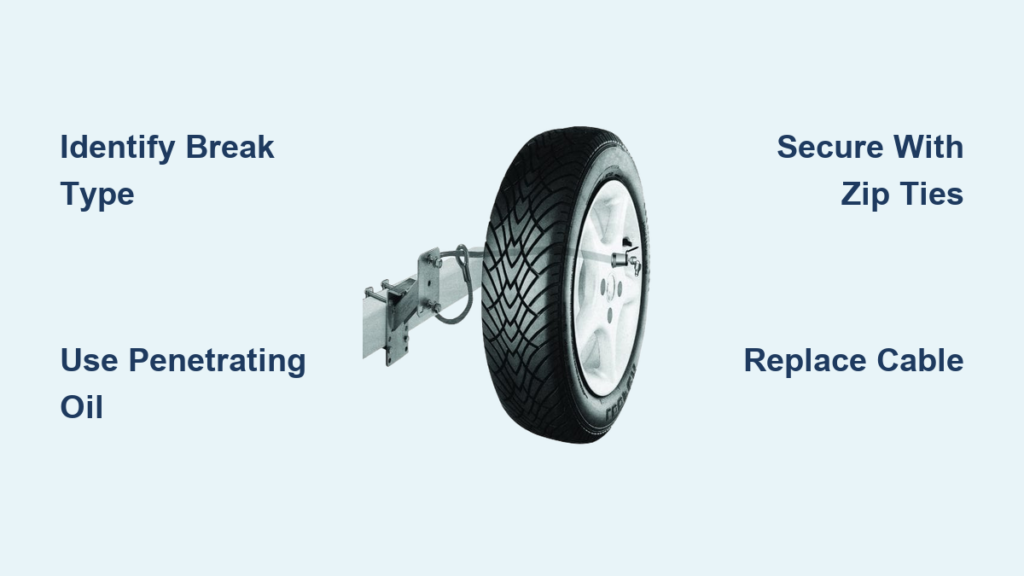
That frustrating moment when you need your spare tire but the cable mechanism is stuck or broken can leave you stranded. A malfunctioning spare tire cable prevents you from safely lowering your spare tire during an emergency, creating a dangerous situation when you’re already dealing with a flat. This comprehensive guide provides verified solutions to diagnose and repair your broken spare tire cable system. You’ll learn exactly what tools you need, how to safely access the mechanism, and proven techniques to fix common cable failures without damaging your vehicle’s undercarriage.
Identifying Your Spare Tire Cable Failure Type

Before attempting repairs, you must determine exactly what’s wrong with your spare tire cable system. Most failures fall into specific categories that require different repair approaches. Knowing which type you’re dealing with prevents wasted effort and potential damage to surrounding components.
Broken Cable vs. Jammed Mechanism
Many drivers mistake a jammed mechanism for a completely broken cable. Check these visual indicators to diagnose your specific problem:
- Complete cable break: Visible separation in the steel cable, often with frayed ends hanging loosely
- Severe rust seizure: Cable appears intact but won’t budge when turning the lowering mechanism
- Partial cable failure: Cable moves slightly but won’t fully lower the tire, often accompanied by grinding sounds
- Corroded housing: Visible rust buildup around the cable housing where it connects to the winch assembly
Pro Tip: Spray penetrating oil on the cable mechanism and let it sit for 15 minutes before attempting to turn the crank. If it suddenly releases, you have a rust seizure rather than a broken cable.
Why Your Spare Tire Cable Failed
Understanding the root cause prevents repeat failures after your repair. Most cable failures happen due to:
- Road salt corrosion: Particularly common in winter climates where salt accelerates metal deterioration
- Lack of maintenance: Most vehicle owners never lubricate their spare tire mechanisms
- Over-tightening: Excessive cranking when storing the spare creates permanent cable stress
- Age-related wear: Cables typically fail between 7-10 years regardless of use
Essential Tools for Spare Tire Cable Repair

Professional-Grade Repair Kit Requirements
Gather these specific tools before starting your repair to avoid dangerous mid-process interruptions. Having the right equipment prevents further damage to surrounding components and ensures your safety while working under your vehicle.
- 15mm and 18mm deep socket wrenches: For accessing the mounting bolts on most domestic vehicles
- PB Blaster or equivalent penetrating oil: Standard WD-40 won’t penetrate severe rust effectively
- 3/8″ drive breaker bar: Provides necessary torque without stripping bolts
- Heavy-duty zip ties (200 lb rating): Critical safety backup while lowering the spare
- Nitrile gloves (mechanic’s grade): Protects hands from sharp cable ends and rust
Critical Safety Note: Never work under your vehicle without proper jack stands. The spare tire assembly can weigh 50-80 pounds and cause serious injury if it falls.
Step-by-Step Broken Cable Replacement Procedure
Safely Securing the Spare Tire Assembly
Before attempting any cable work, you must properly secure the spare tire assembly to prevent accidental release. This multi-step safety process takes only 5 minutes but prevents potentially catastrophic accidents.
- Position your vehicle on level ground and engage parking brake
- Place two heavy-duty jack stands under the vehicle frame rails
- Use 200 lb test zip ties to secure the spare tire to the undercarriage (minimum 4 ties)
- Test security by gently tugging on the spare assembly before proceeding
Warning: Never rely solely on the vehicle jack for this procedure. The jack can slip or fail when working on the cable mechanism.
Removing the Damaged Cable Assembly
With your spare properly secured, follow these precise steps to remove the failed cable system:
- Locate the access panel beneath your rear bumper (typically 6-12 inches forward of the license plate)
- Remove cover bolts using 10mm socket (some models require trim removal)
- Spray penetrating oil liberally on all visible cable connection points
- Use 15mm socket to remove the cable mounting bolt from the winch assembly
- Carefully unwind any remaining cable from the winch drum
Visual Cue: Look for rust-colored debris around connection points – this indicates where corrosion has compromised the mechanism.
Installing Your New Spare Tire Cable

After removing the damaged assembly, follow this precise installation sequence for reliable operation:
- Thread the new cable through the housing tube following original routing path
- Secure cable end to winch drum using provided retaining clip (do not overtighten)
- Attach cable housing to mounting bracket with rubber isolator in place
- Test operation by manually turning winch before reinstalling cover
- Apply white lithium grease to all moving parts before final assembly
Pro Tip: Wrap electrical tape around the cable end during installation to prevent fraying as you feed it through tight spaces.
Emergency Field Solutions When Stuck
Improvised Cable Release Techniques
When you’re stranded with a broken cable and no replacement parts available, these field-expedient methods can help you retrieve your spare tire:
- The hammer technique: Gently tap the cable housing with a rubber mallet while turning the crank (breaks minor rust bonds)
- The leverage method: Use a pry bar against the winch assembly while a second person turns the crank
- The heat solution: Carefully apply heat from a propane torch to the cable housing (melts internal rust bonds)
Critical Warning: Never strike metal components with excessive force – you risk damaging the winch mechanism beyond repair.
Temporary Spare Tire Retrieval System
If you must get your spare down immediately with a completely broken cable:
- Secure the spare with heavy-duty straps to the vehicle frame
- Cut remaining cable flush using bolt cutters
- Carefully lower the spare by manually releasing the retaining mechanism
- Store the spare on your trunk floor rather than attempting reinstallation
Important: This is strictly a temporary solution. Drive directly to a repair facility and avoid highway speeds.
Preventing Future Spare Tire Cable Failures
Quarterly Maintenance Protocol
Preventative maintenance takes only 10 minutes every three months but dramatically extends your cable system’s lifespan:
- Apply white lithium grease to cable and winch mechanism
- Operate the lowering system fully once per season
- Inspect for rust during routine oil changes
- Store spare tire with slight tension (not fully cranked)
Expert Insight: Mechanics report that vehicles stored outdoors fail twice as often as garage-stored vehicles due to moisture exposure.
Environmental Protection Strategies
Your geographic location significantly impacts cable longevity. Implement these location-specific protections:
- Coastal regions: Apply marine-grade corrosion inhibitor every 60 days
- Winter climates: Flush mechanism with rust inhibitor after every salt exposure
- Desert areas: Check for sand intrusion in cable housing quarterly
- Humid environments: Install breathable moisture barrier around assembly
When to Seek Professional Help
Recognizing Beyond-DIY Failures
Certain cable failures require professional equipment and expertise. Consult a mechanic immediately if you encounter:
- Severely stripped mounting threads in the vehicle frame
- Cracked winch assembly housing
- Multiple broken cable strands at connection point
- Evidence of prior improper repair attempts
Cost Consideration: Professional cable replacement typically costs $150-$300 versus $25-$50 for DIY parts, making self-repair financially worthwhile for most failures.
Final Note: A properly functioning spare tire system could save you from a dangerous roadside situation. By following these verified repair techniques and implementing the preventative maintenance schedule, you’ll ensure your emergency tire remains accessible when you need it most. Remember that regular inspection and lubrication prevents 90% of cable failures – make it part of your seasonal vehicle maintenance routine. If you’ve recently repaired your spare tire cable, test the system monthly by partially lowering and raising the spare to verify smooth operation.