Have you ever found yourself stranded with a slow-leaking tire and realized the problem is a faulty valve stem? This small but critical component is often the culprit behind mysterious air loss that leaves your tires underinflated despite regular top-offs. Installing a new tire valve stem is one of the simplest and most cost-effective automotive repairs you can perform yourself, saving you $20-$50 per tire at a service center. The process typically takes just 15-20 minutes with basic tools, yet many drivers unnecessarily pay for this straightforward fix. Whether you’re dealing with a damaged rubber valve stem on your daily commuter or preparing your spare tire for emergencies, knowing how to properly install a valve stem ensures your tires maintain proper pressure for optimal safety, fuel efficiency, and tire longevity.
Why Valve Stems Fail and When to Replace Them
Valve stems deteriorate over time due to constant exposure to road debris, extreme temperatures, and chemical reactions with tire sealants. Most factory-installed rubber valve stems last 5-7 years before the rubber becomes brittle and develops micro-cracks that cause slow leaks. You’ll know it’s time for replacement when your tire consistently loses 1-2 PSI per week despite no visible punctures, or if you notice a hissing sound near the valve cap. Metal valve stems, commonly used with TPMS (Tire Pressure Monitoring Systems), typically fail when the rubber grommet sealing them to the wheel develops cracks. Don’t wait until your tire goes completely flat—proactively replacing worn valve stems prevents dangerous underinflation that can lead to blowouts, especially during highway driving.
Essential Tools for Valve Stem Installation

Basic Equipment Checklist
Before starting, gather these essential tools:
– Valve stem removal tool (inexpensive plastic or metal tool available at auto parts stores)
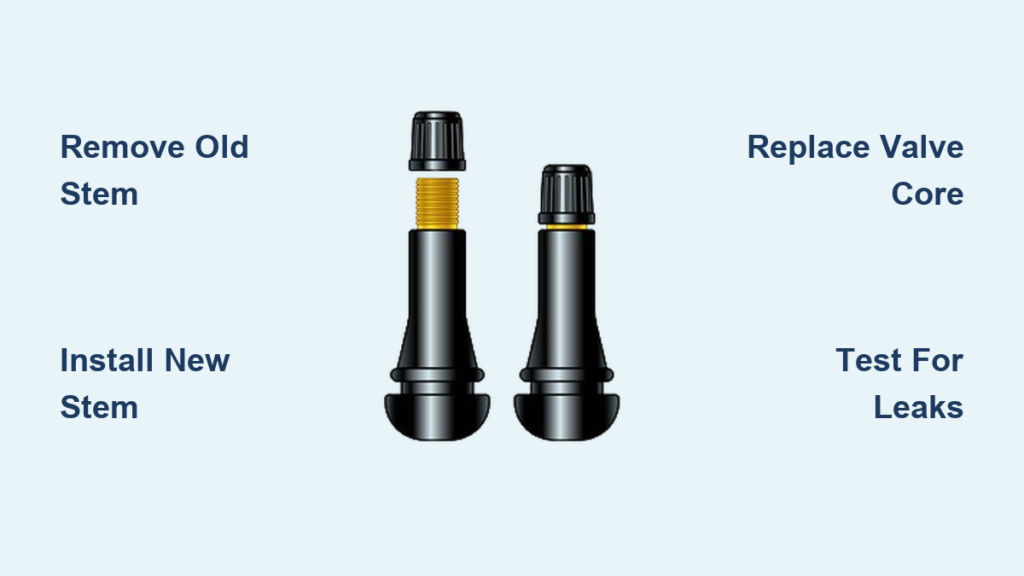
– New valve stems matching your wheel type (rubber snap-in for most vehicles, metal clamp-in for TPMS)
– Valve core tool (small metal tool resembling a nut driver)
– New valve cores (always replace when installing new stems)
– Soapy water solution in spray bottle (for leak testing)
– Tire pressure gauge (digital recommended for accuracy)
– Air chuck or portable air compressor
Safety Gear That Prevents Injuries
Protect yourself with these often-overlooked safety items:
– Work gloves to prevent cuts from sharp wheel edges
– Safety glasses to shield eyes from flying debris
– Wheel chocks to prevent vehicle movement
– Jack stands (never work under a vehicle supported only by a jack)
Step-by-Step Valve Stem Replacement Process
Deflating and Preparing the Tire
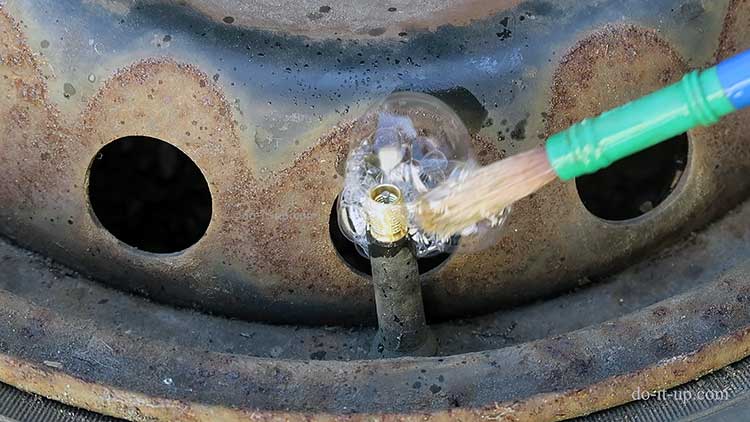
Completely deflate the tire by pressing the valve core stem with your valve core tool. Remove the valve cap and set it aside safely. Apply soapy water around the existing valve stem—if bubbles form, this confirms your leak source. For wheels still mounted on the vehicle, lift and secure the car properly before proceeding. If working with a removed wheel, place it on a stable surface with the valve stem positioned at 6 o’clock for optimal access.
Removing the Old Valve Stem
- Break the tire bead near the valve stem using a tire spoon or pry bar (only necessary if replacing stems on mounted tires)
- Insert the valve stem removal tool into the valve opening and twist clockwise to grip the stem base
- Pull firmly outward while maintaining twisting motion until the stem releases from the wheel
- Inspect the valve hole for rust, debris, or damage that could compromise the new stem’s seal
Pro Tip: If the stem resists removal, gently work it side-to-side while pulling to break the rubber seal without damaging the wheel.
Installing the New Valve Stem
Proper Insertion Technique
- Lubricate the new stem’s rubber grommet with soapy water or tire mounting lubricant
- Insert the stem straight through the wheel hole until the base seat contacts the wheel
- Use the valve stem tool to pull the stem through until the base snaps securely against the wheel
- Verify proper seating by checking that equal amounts of stem protrude on both sides of the wheel
Critical Mistake to Avoid: Never hammer valve stems into place—this damages the sealing surface and creates immediate leaks.
Completing the Installation
Install a new valve core using your core tool, tightening to 2-3 inch-pounds (snug but not overtightened). Immediately inflate the tire to 40 PSI to reseat the bead properly, then adjust to your vehicle’s recommended pressure. Conduct a thorough leak test by spraying soapy water around the new stem, valve cap, and wheel rim—any bubbles indicate a leak needing correction. For TPMS-equipped vehicles, drive 10-15 miles after installation to allow the system to recalibrate to the new pressure readings.
Troubleshooting Common Valve Stem Problems
Fixing Leaks After Installation
If your new valve stem leaks despite proper installation:
– Check for wheel corrosion: Clean rust from the valve hole with a wire brush
– Verify stem length: Too-short stems won’t seal properly against the wheel
– Inspect for pinched rubber: Remove and reinstall if the grommet twisted during insertion
– Replace the valve core: Faulty cores cause 30% of apparent stem leaks
Solving TPMS Sensor Issues
When replacing valve stems on TPMS wheels:
– Always use sensor-specific metal valve stems
– Replace the rubber grommet and valve core together as a service kit
– Reset your TPMS system after installation (consult vehicle manual)
– Check sensor battery life—most last 5-7 years and may need replacement
Preventing Future Valve Stem Failures
Extend the life of your new valve stems with these maintenance practices:
– Replace valve stems every 5 years regardless of visible condition
– Use chrome-plated valve caps that seal out moisture and debris
– Avoid tire shine products containing petroleum that degrade rubber
– Check stem condition during routine tire rotations
– Carry spare stems and cores in your emergency kit
When to Seek Professional Help
While most valve stem replacements are DIY-friendly, visit a professional if:
– Your wheels have significant corrosion around the valve hole
– You’re working with expensive alloy or custom wheels
– The tire bead won’t reseat properly after stem replacement
– You lack proper lifting equipment for vehicle safety
– Your TPMS system fails to recognize the new pressure readings
Cost Comparison: DIY vs. Professional Installation

Replacing valve stems yourself costs $3-$8 per stem plus minimal tool investment, while dealerships typically charge $25-$40 per tire. Even purchasing a basic valve stem tool kit ($8-$15) pays for itself after just two installations. Factor in the convenience of fixing the problem immediately rather than waiting for service center availability—this simple repair literally puts you back on the road in the time it takes to grab a coffee.
Final Safety Check Before Driving
Before returning your vehicle to service, perform these critical checks:
– Confirm tire pressure matches manufacturer specifications
– Verify no air leaks exist at stem, cap, and wheel interface
– Ensure valve cap is securely tightened (it’s part of the sealing system)
– Check that the tire bead is fully seated around the entire rim
– Inspect wheel for proper reinstallation and lug nut torque
Replacing a tire valve stem properly takes less time than your average coffee break but significantly impacts your vehicle’s safety and performance. By mastering this simple procedure, you’ve eliminated one of the most common causes of preventable tire failures. Remember that consistent tire maintenance, including regular valve stem inspections, extends tire life by up to 20% while improving fuel economy and handling. Keep a couple spare valve stems and cores in your glove compartment—you’ll be prepared for unexpected leaks and save yourself from costly roadside assistance calls. The next time you notice mysterious air loss, you’ll know exactly how to diagnose and fix the problem with confidence.