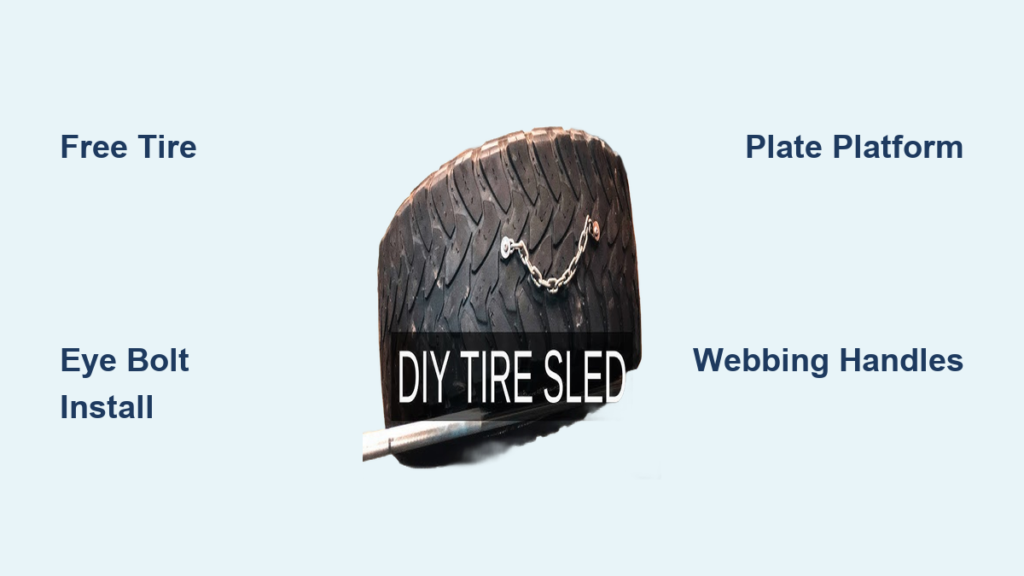
Tired of paying hundreds for commercial sleds when you can build a powerful training tool for under $50? Learning how to make a tire sled unlocks serious strength development without breaking the bank. Most local tire shops will give you the core component—a used tire—for free since they’d otherwise pay disposal fees. With just basic hardware store materials, you’ll create a versatile training machine that builds lower body power, improves grip strength, and delivers serious conditioning benefits. This guide shows you exactly how to make a tire sled that handles heavy plate loading and withstands regular dragging sessions.
Tire Sled Materials Checklist: What You Actually Need

Skip the expensive commercial options by gathering these essential components first. Your foundation is a 20-21 inch diameter tire—this size offers optimal interior space for weight plates while remaining manageable for storage. Visit any local tire shop and simply ask for a used tire in this size range; they’ll typically hand one over without charge since disposal costs them money. Check for intact sidewalls without major punctures or exposed steel belts that could compromise structural integrity during use.
For the towing attachment, you need a 3/8-inch diameter eye bolt (minimum 4-inch length) with matching nut and large washer. This critical component must withstand serious pulling forces without failing. If building a plate-loading version, add a 17×17 inch square of welded wire fencing—not chicken wire, which tears too easily—to create your weight platform. Four 1/4-inch bolts (2-inch length) with washers, lock rings, and nuts secure this mesh to the tire’s inner edge.
Your towing system requires two webbing lengths: a 12-14 foot main strap and 7-foot connector section, plus two 4½-6 inch PVC pipe segments for comfortable handles. Complete your hardware with two carabiners and a steel ring for connections. Total material cost stays under $50, a fraction of commercial sled prices that often exceed $300 before adding weight plates.
Where to Find Free Tires Without Awkward Conversations
Tire shop employees regularly deal with disposal fees for old tires, making them happy to give them away. Walk in and say: “I’m building a fitness sled and need a tire about 20-21 inches in diameter—do you have any you’d be willing to part with?” Most shops keep stacks of tires specifically for people like you. Avoid larger truck tires (too heavy) or tiny car tires (insufficient loading space). Look for tires with moderate tread wear but intact sidewalls—minor tread damage doesn’t affect sled functionality.
Essential Tools for Building a Tire Sled (No Special Equipment Required)

You don’t need a professional workshop to make a tire sled—just basic household tools. A sharp utility knife handles all rubber cutting tasks, particularly for creating initial holes in the tire sidewall. Use a standard screwdriver to punch starter holes and enlarge them, though a cordless drill with metal-cutting bits dramatically speeds up penetration through the tire’s steel belts.
For mesh installation, your drill creates precise mounting holes around the tire’s inner circumference. A metal file smooths PVC handle edges to prevent webbing snagging during intense pulls. Keep a lighter nearby to seal webbing cut ends—this simple step prevents fraying and extends strap lifespan. Measuring tape ensures accurate material dimensions, while pliers help tighten stubborn bolts in tight spaces. If you lack a drill, budget an extra 15-20 minutes for manual hole enlargement.
Critical Safety Precautions Before Starting
Always wear cut-resistant gloves when working with the utility knife on tire rubber—it’s deceptively tough material that can cause serious hand injuries. Work on a stable surface that won’t slip during cutting, and keep your non-dominant hand well clear of the blade path. When enlarging holes with a screwdriver, apply steady pressure in a circular motion rather than forcing straight through, which could cause the tool to slip. Never work on uneven ground where the tire might roll unexpectedly.
Finding and Preparing the Perfect Tire for Your Sled
The right tire makes all the difference in your how to make a tire sled project. Lay your acquired tire vertically and examine the tread pattern to identify the ideal attachment point. Look for the center of a deep tread groove—this location has thinner rubber that’s easier to drill through and aligns with the tire’s natural structural weak points. Avoid areas with visible steel belt exposure or large punctures that could compromise integrity.
Clean the tire thoroughly with a stiff brush and water to remove debris from the tread grooves. This reveals any hidden damage and provides better visibility for your attachment point selection. Position the tire with your chosen attachment area facing upward for easier access during construction. If the tire has excessive sidewall damage or large punctures deeper than 1/4 inch, return for another—structural failure during heavy dragging could cause injury.
Secure Eye Bolt Installation: Preventing Pull-Out During Heavy Drags
Creating a reliable attachment point requires careful execution. Use your utility knife to slice a small pilot hole in your selected tread groove location. Insert your screwdriver through this hole and work it in circular motions to gradually enlarge the opening—this typically takes 5+ minutes of persistent effort. Drill users can speed this up with a 3/8-inch metal bit, but maintain steady pressure to avoid slipping.
Position your eye bolt and apply firm downward pressure while twisting to begin threading it into the tire. The rubber and steel belts will create their own threads as the bolt advances. Continue screwing until the entire threaded portion passes through the sidewall and emerges inside the tire. On the interior side, place a large washer over the protruding threads followed by the nut. Tighten firmly with pliers—this prevents catastrophic pull-out during heavy dragging sessions. Some builders add a lock ring for extra security, but proper tightening usually suffices.
Troubleshooting Common Attachment Failures
If your eye bolt won’t thread properly, the pilot hole is likely too small—enlarge it slightly and try again. Should the bolt spin without advancing, the hole may be too large; remove it and start a new attachment point 2 inches away. If the nut won’t tighten sufficiently, check for rubber debris between washer and tire surface—clean thoroughly before reattempting. Never force a bolt that won’t thread properly, as this can create weak spots that fail under load.
Creating a Plate-Loading Platform for Maximum Weight Capacity
For serious training, your tire sled needs a secure weight platform. Lay the tire on its side with the eye bolt facing up. Position your wire mesh square over the tire’s opening, centering it for equal overhang. From inside the tire, push four mounting bolts upward through the mesh and rubber at regular intervals around the circumference.
Outside the tire, add a washer, lock ring, and nut to each bolt. Tighten securely while maintaining mesh tension—sagging causes pavement contact and eventual tearing. Pull the mesh as tight as possible during installation, knowing some stretching will occur with use. For enhanced durability, consider double-layering the mesh or using thicker gauge wire. Alternatively, cut a plywood circle to fit inside the rim lip for a sag-proof solution, though this requires more precise cutting through the reinforced sidewall.
DIY Towing System: Building Handles That Won’t Fail Mid-Workout
Seal both ends of your webbing sections with a lighter to prevent fraying—this simple step extends strap life dramatically. For handle connections, thread one end of the 7-foot webbing through a PVC handle, double it back, and form a loop. Pinch both strands together, create another loop, and pull the handle through to secure it. Slide a steel ring onto the webbing before completing this step for main strap connection.
Attach your 12-14 foot main tow strap by securing carabiners to each end with two overhand knots. Wrap these knots tightly with duct tape to prevent loosening during use. The extended length ensures proper pulling angles regardless of your height—shorter straps force awkward body positions that strain your lower back. Connect the handle assembly to the main strap using the steel ring, then attach the opposite end to your tire’s eye bolt with the remaining carabiner.
Commercial vs. DIY Tire Sled: Why $50 Beats $500 Every Time
Commercial sleds cost $300-$600 before adding weight plates, handles, and harnesses—your DIY tire sled delivers comparable training benefits for under $50. The tire itself costs nothing, and remaining hardware totals minimal expense. Despite the low investment, a properly constructed tire sled handles serious training loads and provides years of reliable service with basic maintenance.
You gain customization possibilities commercial equipment can’t match—you control exact specifications and can repair individual components as needed. For fitness enthusiasts seeking functional strength equipment without the commercial price tag, learning how to make a tire sled represents the ultimate starting point. The satisfaction of training on equipment you built yourself adds psychological benefits that enhance your workout commitment.
Preventing Common Tire Sled Failures: Maintenance Checklist
After several weeks of regular use, inspect your wire mesh platform for stretching that causes sagging. Sagging mesh contacts pavement during dragging, accelerating wear and eventually tearing. Tighten mounting bolts regularly to maintain tension, or replace with heavier-gauge mesh for long-term durability. The plywood alternative eliminates this issue entirely but requires more precise initial construction.
Before each session, double-check all connection points—particularly the eye bolt attachment and webbing knots. Substantial dragging forces can loosen hardware over time. Tighten the eye bolt nut and mesh mounting bolts as standard maintenance practice. Examine webbing for fraying at knot locations and replace straps at first sign of significant wear. A quick 2-minute inspection prevents mid-workout failures that disrupt training and potentially cause injury.
Your completed tire sled enables diverse training applications—build lower body power through pushing movements, develop grip strength with extended dragging sessions, and enhance conditioning with high-volume work. Unlike eccentric-heavy exercises that create significant soreness, sled dragging promotes blood flow without excessive muscle damage, making it perfect for active recovery days. With proper construction and maintenance, your DIY tire sled becomes a cornerstone of your strength development for years to come.