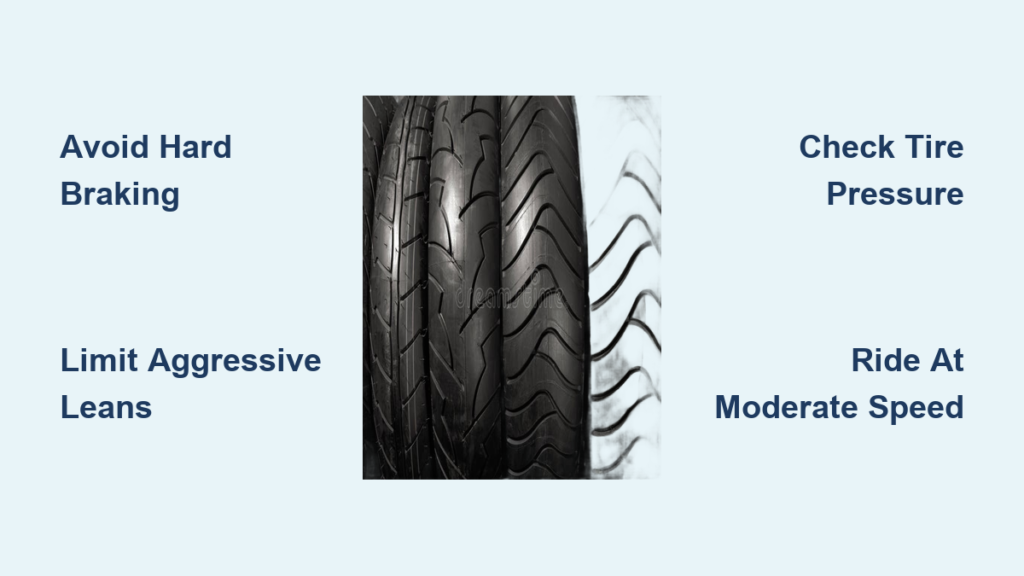
That fresh tire smell and the crisp tread pattern of new motorcycle tires promise enhanced performance and safety—but only if you properly break them in. Many riders mistakenly believe new tires deliver maximum grip right out of the box, leading to dangerous situations when they push too hard during those critical first miles. The reality is that skipping or rushing the break-in process can compromise your tire’s performance, shorten its lifespan, and put you at risk when you need maximum traction the most.
New motorcycle tires have a thin layer of mold release agent on their surface from manufacturing that temporarily reduces grip. This coating, combined with the ongoing vulcanization process of the rubber compound, means your tires won’t deliver their designed performance characteristics until properly broken in. Without this essential period, you’re essentially riding on a tire that hasn’t reached its engineered potential—like expecting peak performance from a cold engine. By dedicating 100-300 miles to careful break-in, you’ll maximize traction, extend tire life by thousands of miles, and gain the confidence that comes with knowing your rubber is performing exactly as engineered.
Why Your Fresh Motorcycle Tires Feel Slippery for the First 100 Miles
New motorcycle tires require a break-in period primarily due to the manufacturing process. During production, tire molds use release agents to prevent the rubber from sticking, leaving a thin residue on the tire surface that reduces initial grip. More critically, the rubber compound continues its chemical vulcanization process after leaving the factory, meaning the tire hasn’t yet reached its optimal molecular structure for maximum adhesion and durability.
The first 50 miles serve as your tire’s “warm-up phase” where the release agents gradually wear off through normal contact with the road. During this period, you’ll notice reduced feedback through the handlebars and a slightly vague feeling when initiating lean angles. This isn’t a defect—it’s your tire working as designed while it completes its curing process. The rubber compound needs controlled heat cycles to stabilize its molecular structure, which directly affects how the tire grips, handles, and wears over its lifespan.
Riders who ignore this critical period often report inconsistent traction, especially when pushing hard in corners. The tire hasn’t had time to develop uniform grip characteristics across its entire contact patch, creating unpredictable handling when you need it most. Proper break-in ensures the rubber cures evenly, creating consistent performance from center to edge regardless of your lean angle.
100-Mile Break-In Strategy for Maximum Tire Performance

Follow this progressive approach to maximize your tire’s performance potential without compromising safety during the critical break-in period. The first 50 miles demand the most restraint—treat this phase as a gentle introduction between your motorcycle and the new rubber. Ride at moderate speeds, avoid sudden inputs, and keep lean angles shallow. Focus on smooth throttle control and gradual braking to generate consistent, moderate heat across the tire surface without creating hot spots.
Between 50-150 miles, gradually expand your riding envelope while maintaining awareness. Begin incorporating moderate-speed corners that engage different portions of the tire’s contact patch. Alternate between long sweeping curves, medium-radius turns, and occasional tighter corners to ensure comprehensive break-in across the entire tread width. Pay attention to how the tire responds as you increase intensity—many riders notice a distinct “click” in feedback around the 100-mile mark when the tire transitions from broken-in to fully performing.
For optimal results, vary your riding conditions throughout the break-in period. Different road surfaces, temperatures, and riding styles create diverse heat cycles that accelerate the curing process. Schedule multiple short rides with complete cooling periods between sessions rather than one extended ride. The thermal expansion and contraction that occurs as the tire heats and cools helps set the rubber’s molecular structure for maximum longevity and consistent performance.
How Temperature Affects Your Tire Break-In Process
Cold tires below 50°F require significantly longer break-in periods as the rubber compound remains too stiff to cure properly. In these conditions, extend your conservative riding phase to 75 miles and avoid any aggressive maneuvers until temperatures consistently stay above 60°F. Conversely, riding in extreme heat above 95°F can cause uneven curing as certain sections of the tire overheat while others remain underdeveloped.
The ideal break-in temperature range falls between 65-85°F, where the rubber compound achieves optimal flexibility for even curing. Monitor road surface temperature rather than air temperature, as asphalt can be 20-30 degrees hotter than ambient air on sunny days. If riding in marginal conditions, reduce your speed and intensity accordingly—proper break-in matters more than covering mileage quickly.
Critical Mistakes That Ruin New Motorcycle Tires During Break-In

Skipping the Gradual Heat Cycle Process
Many riders make the dangerous mistake of immediately pushing new tires to their limits, assuming fresh rubber equals maximum grip. Hard acceleration that breaks traction, aggressive braking that locks wheels, or extreme lean angles during the first 50 miles creates uneven wear patterns and prevents proper curing. These actions generate excessive heat in localized areas, causing the rubber to harden prematurely in those spots while other sections remain underdeveloped.
Ignoring Tire Pressure During Critical First Miles
Failing to check and adjust tire pressure before each break-in ride compromises the entire process. Under-inflated tires develop excessive heat in the sidewalls, accelerating wear and potentially damaging internal structure. Over-inflated tires reduce the contact patch and create center wear that prevents proper edge development. Check pressure when tires are cold—before your first ride of the day—and adjust to manufacturer specifications, accounting for passenger or cargo weight.
Misinterpreting Normal Break-In Characteristics as Defects
Some riders mistake the expected vagueness of new tires for manufacturing defects, leading them to return otherwise perfect rubber. During break-in, tires often feel less responsive, provide muted feedback, and require more effort to initiate lean transitions. These characteristics should gradually improve as mileage accumulates. Only consider a tire defective if problems persist beyond 300 miles with proper maintenance and riding technique.
Sport vs. Touring Tires: Different Break-In Requirements
High-Performance Sport Tires Demand Patience
Sport tires with soft compounds require the most careful break-in approach due to their delicate rubber formulations. Expect to invest the full 200-300 mile range before these tires reach peak performance. Their softer construction makes them particularly vulnerable to flat-spotting from hard braking or acceleration during the initial phase. The payoff for patience is exceptional grip once fully broken in, but rushing the process can permanently compromise their performance potential.
Touring and Cruiser Tires Break In Faster but Still Need Care
Harder compound touring and cruiser tires typically reach optimal performance in 100-150 miles due to their more stable rubber formulations. While they may feel adequately grippy sooner, skipping proper break-in still reduces their total lifespan and can create inconsistent edge grip when you need it. These tires benefit from the same progressive approach—just with slightly less restrictive initial mileage.
When to Suspect a Real Tire Problem During Break-In
Persistent vibration that doesn’t resolve after 75 miles often indicates improper mounting or balance rather than a tire issue. Have a professional recheck bead seating and balance weights, as even minor errors become noticeable during the sensitive break-in period. Similarly, consistent pulling to one side that isn’t attributable to road crown suggests alignment or suspension problems rather than tire defects.
Uneven wear patterns visible before 150 miles signal mechanical issues that will continue affecting tire performance regardless of break-in status. Feathered edges, center wear, or one-sided wear indicate problems with suspension, alignment, or inflation that need professional diagnosis. Don’t assume these issues will “work themselves out”—address them immediately to prevent unnecessary tire damage.
Breaking in new motorcycle tires properly transforms an ordinary riding experience into exceptional performance that lasts. By dedicating those first 100-300 miles to controlled riding, you allow the rubber compound to cure evenly and develop consistent grip characteristics across the entire contact patch. The slight inconvenience of restrained riding pays exponential dividends in tire longevity, predictable handling, and maximum safety when traction matters most.
Remember that proper break-in isn’t just about mileage—it’s about how you accumulate those miles. Vary your riding style, monitor temperature conditions, and pay attention to how the tire’s feedback evolves. When you feel that distinct improvement in responsiveness around the 100-mile mark, you’ll know your patience has paid off. Treat your new tires with the care they deserve during break-in, and they’ll reward you with thousands of miles of confident, predictable performance when you need it most.